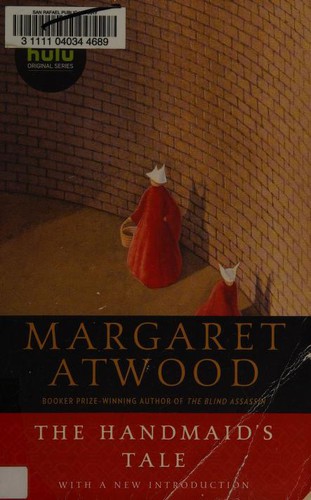
The Handmaid's Tale
by Margaret Atwood · 1985
A theocratic coup strips American women of every right in one stroke, and a fertile woman is conscripted into forced childbearing for the ruling class -- told in a voice too dryly observant to ever feel like propaganda.
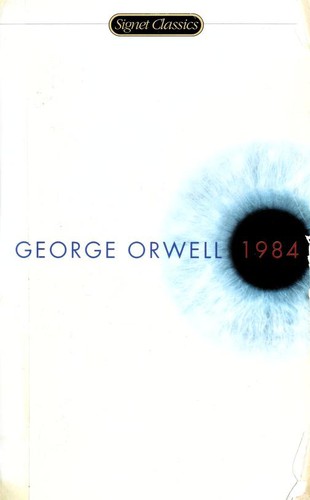
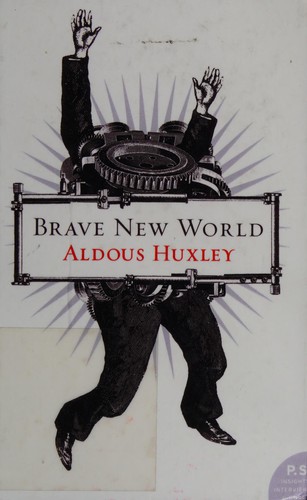
Worth reading? The Handmaid's Tale earns its status as the modern dystopia everyone reaches for because Atwood's rule was that nothing in Gilead could be invented -- every atrocity has a historical precedent somewhere. That constraint makes it hit harder than more purely speculative dystopias. If 1984 is about surveillance and Brave New World is about pleasure, this is about control exercised specifically through the body, and it's the sharpest of the three on that particular axis.
| Author | Margaret Atwood |
|---|---|
| Published | 1985 |
| Publisher | Anchor Books |
| Category | Fiction |
| Favorite quote | “Nolite te bastardes carborundorum.” |
The Verdict
The detail that makes this book more unsettling than most dystopias is that Atwood didn’t invent anything – she’s said every practice in Gilead has a real historical precedent. That’s a harder thing to shake off than pure invention, and it’s the reason the book keeps getting rediscovered by new readers who assume it must be more speculative than it is.
you want a dystopia built from things that have actually happened somewhere, to someone, rather than pure speculation
you want a fast-plotted thriller with a clean resolution -- this is a slow, interior, fragmented narration, and the ending is deliberately ambiguous
Book Summary
Gilead didn't invent any of its methods -- forced surrogacy, stripped legal rights, enforced dress codes, state-controlled reproduction -- Atwood drew every element from an actual historical or contemporary precedent somewhere in the world. The horror of the novel is recognition, not invention.
Offred's fragmented, associative narration (moving between the present and memories of her old life) shows how totalitarian control works by cutting people off from continuity -- from their names, their families, their own past selves. Rebuilding identity under that kind of erasure becomes the novel's real subject.
Complicity is distributed unevenly but widely -- the Aunts, Serena Joy, and even Offred herself participate in maintaining Gilead in small ways, which is Atwood's argument that authoritarian systems require far more everyday cooperation than pure force from the top.
Top 8 Lessons from The Handmaid's Tale
- Authoritarian control over women in Gilead is exercised specifically through control of reproduction and the body.
- Every element of Gilead's oppression is drawn from a real historical precedent -- nothing in the novel is purely invented.
- Stripping people of names, money, and legal status is a faster route to control than physical violence alone.
- Offred's memories of her pre-Gilead life (her name, her daughter, her job) are acts of quiet resistance against enforced erasure.
- Complicity is distributed across many characters (the Aunts, Serena Joy) -- authoritarian systems need collaborators, not just leaders.
- Language itself is restricted and repurposed by Gilead (the ritual phrases, the renaming of Handmaids) as a tool of control.
- Small, private acts (a hidden diary, a whispered phrase, a stolen moment) matter even when they can't overturn the larger system.
- The ambiguous ending resists the comfort of a clean resolution, keeping the reader uncertain whether resistance actually worked.
Top 5 Quotes from The Handmaid's Tale
"Nolite te bastardes carborundorum."
Margaret Atwood, The Handmaid's Tale
"Better never means better for everyone. It always means worse, for some."
Margaret Atwood, The Handmaid's Tale
"I am a cloud, congealed around a central object, the shape of a pear, which is hard and more real than I am."
Margaret Atwood, The Handmaid's Tale
"We were the people who were not in the papers. We lived in the blank white spaces at the edges of print."
Margaret Atwood, The Handmaid's Tale
"Ignoring isn't the same as ignorance, you have to work at it."
Margaret Atwood, The Handmaid's Tale
Frequently Asked Questions
Is The Handmaid's Tale worth reading?
Yes -- Atwood's rule that every detail of Gilead be drawn from real historical precedent gives it more staying power than most speculative dystopias.
Is The Handmaid's Tale hard to read?
Emotionally, yes -- the subject matter is bleak. Structurally, it's accessible, though the narration is fragmented and moves between past and present.
What is the main theme of The Handmaid's Tale?
Control exercised through the body and reproduction, and how quickly rights can be stripped away when enough people go along with it.
Is The Handmaid's Tale connected to the TV series?
The novel is the source material and ends earlier and more ambiguously than the show, which continues well past the book's plot.
Ready to read it?
Get The Handmaid's Tale on Amazon