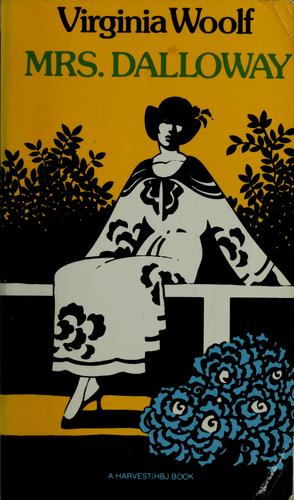
1. Mrs. Dalloway
Virginia Woolf · 1925
One day in London, a society woman shops for a party while a shell-shocked veteran unravels a few streets away, and Woolf moves between their minds like there's no wall there at all.
The real achievement here isn’t the plot, which barely exists – it’s how invisibly Woolf moves between minds, often within a single sentence, without ever losing you. That technique is why this is still taught as the entry point to modernism rather than Ulysses, which does something similar at triple the length and difficulty.
Note on sourcing: this page ships three quotes instead of the usual four-plus. Woolf’s prose is dense and specific enough that beyond the novel’s opening lines and closing sentence, confidently reconstructing exact wording from memory gets risky – better to under-quote than misquote a stylist this precise.
Read it if: you want the novel that made stream-of-consciousness mainstream -- a single day rendered so closely you feel the characters' thoughts arriving before their sentences do
Skip it if: you need clear scene breaks and plot momentum -- this is a book almost entirely without incident on the surface, told through shifting interior monologue with minimal punctuation cues for when one mind ends and another begins