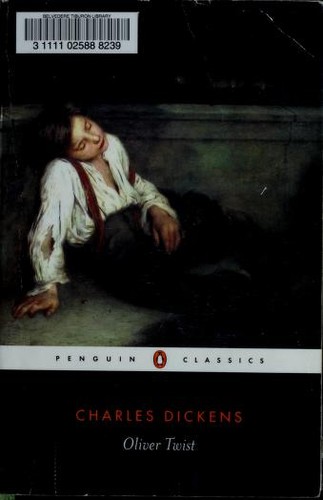
Oliver Twist
by Charles Dickens · 1838
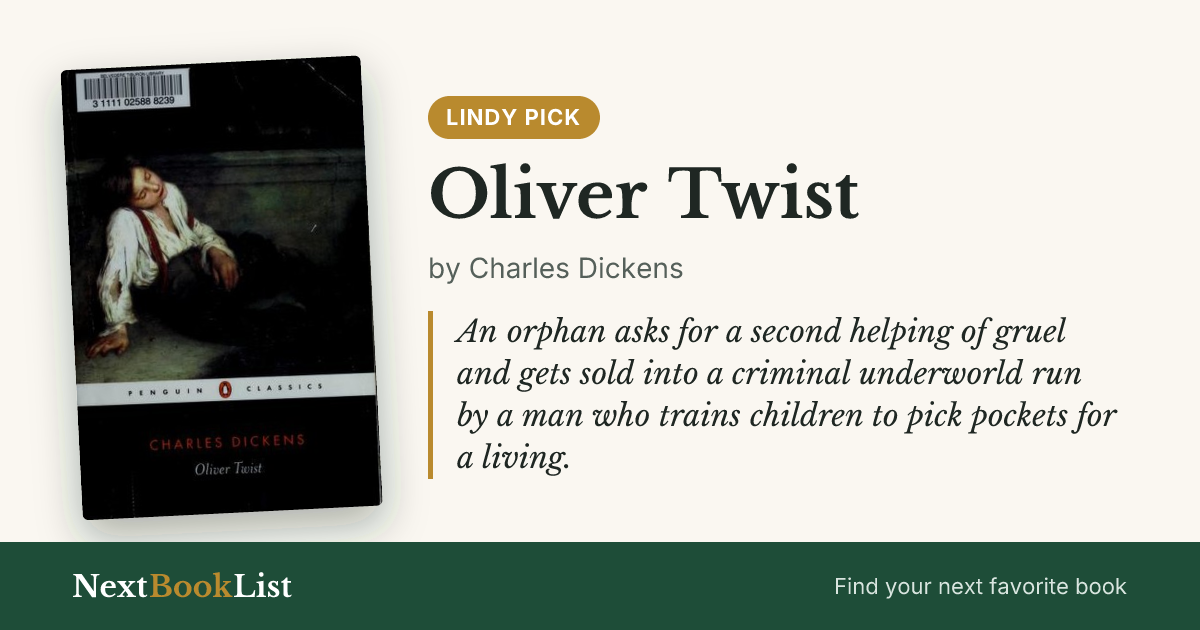
An orphan asks for a second helping of gruel and gets sold into a criminal underworld run by a man who trains children to pick pockets for a living.
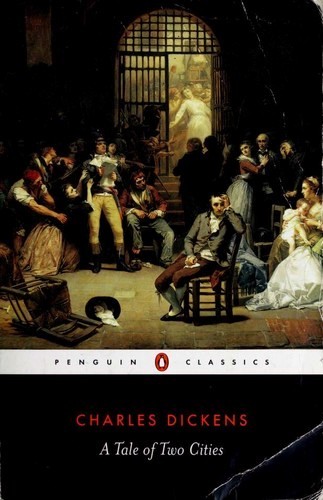
Worth reading? Oliver Twist endures less for its plotting, which leans hard on coincidence, and more for Fagin's den and the workhouse system Dickens is openly furious about. It's rougher and less disciplined than Great Expectations or A Tale of Two Cities, but it's also the angriest of his major novels, and that anger still reads as genuine. Skip it if you want Dickens's more mature, controlled plotting -- go to the later novels for that.
| Full Title | Oliver Twist; or, The Parish Boy's Progress |
|---|---|
| Author | Charles Dickens |
| Published | 1838 |
| Publisher | Penguin Classics |
| Category | Fiction |
| Favorite quote | “Please, sir, I want some more.” |
The Verdict
This is early, angrier Dickens, before he fully sanded down his plotting. The coincidences pile up by the end in ways his later novels handle more gracefully, and Fagin’s characterization has aged into a genuinely uncomfortable spot given its antisemitic caricature – worth knowing going in, not a reason to skip the book, but not something to wave away either.
What still lands is the fury at the workhouse system and at a society that treated child poverty as a character flaw. Read it for that anger, and for Nancy, who’s a more complicated, tragic character than the rest of the novel’s broader strokes would suggest.
you want early Dickens at his most socially furious -- workhouses, child criminals, and a plot that never lets you forget how the Victorian poor law actually treated orphans
you want subtlety -- this is Dickens before he fully refined his craft, and the villains are cartoonish and the coincidences (long-lost relatives, convenient timing) are heavy-handed even by his standards
Book Summary
Oliver, born in a workhouse and orphaned at birth, is starved, abused, and eventually runs away to London, where he falls in with Fagin, a criminal who trains orphaned boys to be pickpockets, and the violent burglar Bill Sikes. The novel is structured as an attack on the 1834 Poor Law, which Dickens believed treated poverty as a moral failing rather than a circumstance.
Nancy, Sikes's abused companion, is the novel's most complex character -- loyal to the criminal world that's ruined her life, but ultimately willing to risk everything to protect Oliver, which costs her her life. Her murder is one of the most genuinely disturbing scenes Dickens ever wrote.
The novel eventually resolves through a string of coincidences and revealed parentage that feel dated now, but the anger underneath -- at institutions that fail children, at a criminal underworld that exploits them, at a society that blames the poor for their own poverty -- is what actually holds the book together.
Top 8 Lessons from Oliver Twist
- Oliver's famous request for more gruel at the workhouse is a direct, pointed attack on the 1834 Poor Law, which Dickens saw as cruel and dehumanizing toward orphaned and destitute children.
- Fagin runs a training operation for child pickpockets, showing how poverty and lack of institutional support funnel children directly into crime rather than protecting them from it.
- Nancy's loyalty to Bill Sikes despite his abuse of her illustrates how trapped she is in the criminal world, even as she risks her life to protect Oliver.
- Mr. Bumble, the pompous workhouse beadle, is Dickens's satire of petty institutional cruelty -- rule-following used as a shield against basic compassion.
- The eventual revelation of Oliver's genteel parentage lets Dickens resolve the plot happily, but also reflects the novel's assumption that Oliver's inherent goodness was tied to 'good blood' rather than upbringing alone.
- Sikes's murder of Nancy and his subsequent panicked flight is written with real horror, a tonal departure from the novel's more comic early workhouse chapters.
- The Artful Dodger's charisma as a child criminal complicates the novel's moral clarity -- he's likable even while actively training Oliver into a life of crime.
- Fagin's eventual trial and execution shifts the narrative's sympathy briefly toward him as a frightened, cornered man, undercutting his earlier cartoonish villainy.
Top 4 Quotes from Oliver Twist
"Please, sir, I want some more."
Charles Dickens, Oliver Twist
"If the law supposes that, the law is a ass -- a idiot."
Charles Dickens, Oliver Twist
"It is a world of disappointment: often to the hopes we most cherish, and hopes that do our nature the greatest honour."
Charles Dickens, Oliver Twist
"There are dark shadows on the earth, but its lights are stronger in the contrast."
Charles Dickens, Oliver Twist
Frequently Asked Questions
Is Oliver Twist worth reading?
Yes, especially for the social anger underneath the plot -- Dickens is directly attacking the Poor Law and the institutions that failed orphaned children, and that fury still reads as genuine.
Is Oliver Twist Dickens's best novel?
No -- it's an early, rougher work compared to Great Expectations or A Tale of Two Cities, with heavier coincidence and more cartoonish villains. It's worth reading for its rage, not its polish.
Who is Fagin in Oliver Twist?
A criminal who runs a den of orphaned and homeless boys he trains as pickpockets, one of the most famous villains (and most controversial characters) in Dickens's work.
What is the main theme of Oliver Twist?
That the institutions meant to protect poor and orphaned children -- workhouses, the Poor Law -- actively fail them, pushing them toward the criminal underworld instead.
Ready to read it?
Get Oliver Twist on Amazon