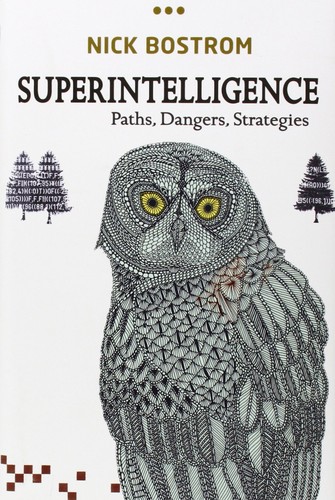
Superintelligence
by Nick Bostrom · 2014
The dense, academic book that got Elon Musk and Bill Gates publicly worried about AI, still the most rigorous case for why a superintelligent AI is a control problem, not a features problem.
Worth reading? Bostrom's argument, stripped of jargon, is simple and unsettling: once an AI surpasses human intelligence across the board, its goals (not its intelligence) determine whether the outcome is good, and getting goals exactly right, the 'alignment problem', is far harder than it sounds. The book is genuinely difficult, written like an Oxford philosophy seminar, but it's the source text every later AI-safety book (Life 3.0, If Anyone Builds It) is arguing with or building on. Read it if you want the rigorous version of the AI-risk argument. Skip it if you want prose over precision, try Life 3.0 first.
| Full Title | Superintelligence: Paths, Dangers, Strategies |
|---|---|
| Author | Nick Bostrom |
| Published | 2014 |
| Category | Business & Money |
| Favorite quote | “Before the prospect of an intelligence explosion, we humans are like small children playing with a bomb.” |
The Verdict
This is the book that turned AI safety from a fringe worry into a boardroom topic. Bostrom writes like a philosopher, not a journalist, so it’s slower going than anything else on this list, but the orthogonality thesis and the control problem are load-bearing ideas for the entire field that followed. Read it once you’ve got your footing from something friendlier, then come back for the rigor.
readers who want the philosophical foundation under every modern AI-safety argument
you want something readable on a beach, this is a philosophy textbook in disguise
Book Summary
Bostrom's central worry isn't that AI becomes 'evil,' it's the orthogonality thesis: intelligence and goals are independent, so a superintelligent system could pursue an utterly trivial goal (his famous example is paperclip maximization) with terrifying competence and no malice required. The danger scales with capability, not with ill intent.
He then walks through the 'control problem': once a system is smarter than its creators, humans lose the ability to correct its goals after the fact, so alignment has to be solved before the system exists, not patched afterward. The book catalogs paths to superintelligence (whole-brain emulation, machine learning, biological enhancement) and strategies for keeping the transition survivable, none of which he presents as easy or guaranteed.
Top 7 Lessons from Superintelligence
- Intelligence and goals are orthogonal, a superintelligent system needs no malice to be dangerous.
- The 'paperclip maximizer' thought experiment shows how a trivial goal, pursued competently enough, becomes catastrophic.
- Alignment must be solved before a superintelligent system exists, correction afterward may not be possible.
- Whoever achieves a decisive strategic advantage first shapes the outcome for everyone else.
- Multiple technical and institutional paths could lead to superintelligence, not just one.
- Slow, careful capability gains are safer than a fast takeoff nobody can supervise.
- Most AI risk conversations before this book underestimated how hard the control problem actually is.
Top 2 Quotes from Superintelligence
"Before the prospect of an intelligence explosion, we humans are like small children playing with a bomb."
Nick Bostrom, Superintelligence
"If machine brains one day come to surpass human brains in general intelligence, then this new superintelligence could become very powerful. As the fate of the gorillas now depends more on us humans than on the gorillas themselves, so would the fate of our species depend on the actions of the machine superintelligence."
Nick Bostrom, Superintelligence
Frequently Asked Questions
Is Superintelligence worth reading?
Yes, if you want the rigorous philosophical foundation of the AI-safety field, but it's genuinely dense. Read Life 3.0 first if you want something more accessible.
What is the main idea of Superintelligence?
A superintelligent AI's danger comes from misaligned goals pursued with overwhelming competence, not malice, and that alignment must be solved before such a system exists.
Why did this book make Elon Musk and Bill Gates worried about AI?
Bostrom's control-problem argument, that once AI surpasses human intelligence, correcting its goals after the fact may be impossible, convinced both that AI safety needed to be treated as an urgent, not theoretical, problem.
Ready to read it?
Get Superintelligence on Amazon