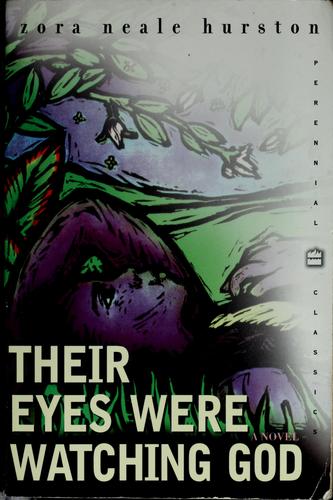
Their Eyes Were Watching God
by Zora Neale Hurston · 1937
A Black woman in early-1900s Florida survives three marriages to find out what she actually wants love to feel like.
Worth reading? This is one of the great American love stories precisely because it refuses to make love easy or safe -- Janie has to walk away from security twice before she finds something real. If you want a comparable Harlem Renaissance-era classic with a more urban setting, try Nella Larsen's Passing, but for the full Southern vernacular voice and emotional payoff, this is the one to start with.
| Author | Zora Neale Hurston |
|---|---|
| Published | 1937 |
| Publisher | Harper Perennial Modern Classics |
| Category | Fiction |
| Favorite quote | “Ships at a distance have every man's wish on board.” |
The Verdict
Janie’s arc across three marriages does something a lot of “find yourself” narratives fake – it makes you feel the real cost of the security she gives up to get something honest. Jody’s marriage in particular, where he literally silences her in public, is one of the sharpest depictions of a marriage hollowing out a person while looking successful from the outside.
Skip it only if the phonetic vernacular dialogue is a genuine barrier for you right now – it takes a chapter or two to find your footing in it. Once you do, this is one of the best-written American love stories, full stop, not just “for its era.”
you want a beautifully written, dialect-rich novel about a woman's search for self-determination and real love, told entirely on her own terms
you're not ready for the Southern Black vernacular dialogue Hurston writes phonetically throughout -- it's a deliberate stylistic choice, not a barrier to push past quickly, but it does take some adjustment
Book Summary
Janie Crawford tells her life story to her friend Pheoby after returning to her hometown: a marriage arranged by her grandmother for security, a second marriage to an ambitious, controlling man who turns their town into his personal kingdom and Janie into an ornament, and a third relationship with the younger, freer Tea Cake, who finally treats her like an equal and lets her find her own voice. Each marriage strips away or restores a piece of who Janie actually is.
Hurston's central argument is that Janie's grandmother's dream of security through marriage to a landowner isn't the same thing as love or self-determination, and that Janie has to reject respectability and status twice before she finds something real with Tea Cake. The novel treats voice -- literally, whether Janie is allowed to speak for herself in front of others -- as the real measure of a marriage's health.
It's also written almost entirely in Black Southern vernacular dialogue, a choice that was controversial among Hurston's contemporaries (including Richard Wright, who criticized it) but that's now recognized as central to the novel's power and to Hurston's broader work as an anthropologist of Black Southern culture.
Top 8 Lessons from Their Eyes Were Watching God
- Janie's grandmother pushes her into a security-focused marriage, arguing that after generations of slavery, safety mattered more than love -- and the novel treats that as understandable but ultimately wrong for Janie.
- Jody Starks turns their town into his personal kingdom and Janie into a silent showpiece, showing how ambition and control can hollow out a marriage even as it succeeds materially.
- Janie's forced silence during Jody's marriage -- literally being told not to speak in public -- is used as the clearest symbol of a relationship stripping away her identity.
- Tea Cake's relationship with Janie, treating her as an equal partner rather than property or ornament, argues that real love requires mutual respect, not just provision or status.
- The hurricane sequence near the end shows how quickly social status and material security can be erased by forces indifferent to human hierarchy.
- Janie's trial after Tea Cake's death, where she has to explain herself to a mostly white jury and courtroom, shows how little control Black women had over their own narratives in this era, even in self-defense.
- Hurston's use of Black Southern vernacular throughout the dialogue treats that speech as a legitimate literary voice, not something to be cleaned up for a wider audience.
- Janie's return home and decision to tell her own story to Pheoby, rather than to the gossiping porch-sitters, argues that she alone gets to decide who deserves to hear her truth.
Top 4 Quotes from Their Eyes Were Watching God
"Ships at a distance have every man's wish on board."
Zora Neale Hurston, Their Eyes Were Watching God
"There are years that ask questions and years that answer."
Zora Neale Hurston, Their Eyes Were Watching God
"Love is like the sea. It's a moving thing, but still and all, it takes its shape from the shore it meets, and it's different with every shore."
Zora Neale Hurston, Their Eyes Were Watching God
"She pulled in her horizon like a great fish-net... She called in her soul to come and see."
Zora Neale Hurston, Their Eyes Were Watching God
Frequently Asked Questions
Is Their Eyes Were Watching God worth reading?
Yes -- it's widely considered one of the great American novels and a foundational work of the Harlem Renaissance era, with a genuinely moving central love story.
Is Their Eyes Were Watching God hard to read?
The Black Southern vernacular dialogue takes some adjustment, but it's not difficult in the way modernist fiction can be -- the plot is clear and propulsive once you're acclimated to the dialect.
What is the main theme of Their Eyes Were Watching God?
A woman's search for self-determination and real love, told across three marriages, arguing that security and status are not the same thing as being truly seen by a partner.
Who should read Their Eyes Were Watching God?
Anyone who wants a beautifully written American classic about a woman finding her own voice, especially readers interested in the Harlem Renaissance era.
Ready to read it?
Get Their Eyes Were Watching God on Amazon