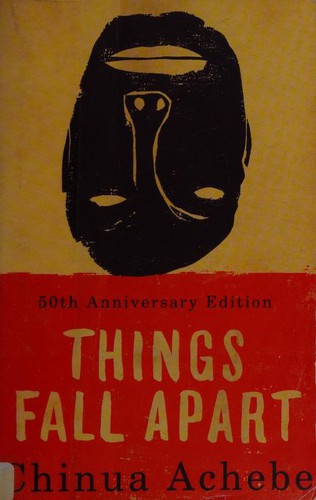
Things Fall Apart
by Chinua Achebe · 1958
A respected Igbo wrestler and warrior builds a life on strength and tradition -- then watches colonialism dismantle everything his society valued, including him.
Worth reading? Things Fall Apart still stands as the definitive counter-narrative to colonial fiction about Africa -- Achebe builds Igbo society in full before he lets it fracture, which is exactly why the fracture lands. Read it before or alongside Conrad's Heart of Darkness; it's the response that book didn't know it needed.
| Author | Chinua Achebe |
|---|---|
| Published | 1958 |
| Publisher | Anchor Books |
| Category | Fiction |
| Favorite quote | “The white man is very clever. He came quietly and peaceably with his religion.” |
The Verdict
The structure is the argument – by the time the missionaries show up two-thirds of the way through, you already know Umuofia well enough that its unraveling feels like watching a real place get erased, not an abstract historical footnote.
you want the novel that answered centuries of Western fiction depicting Africa as an unpeopled 'heart of darkness' -- a complex, specific society shown from the inside before it's destroyed from the outside
you want colonialism as background scenery -- Achebe structures the whole novel so the second half's arrival of missionaries and colonial administrators lands as a genuine rupture, not just context
Book Summary
Achebe spends the first two-thirds of the novel establishing Igbo society in full -- its laws, religion, agriculture, family structure, internal conflicts and contradictions -- specifically so the reader understands exactly what colonialism destroys, rather than encountering an already-flattened 'primitive' culture.
Okonkwo's tragic flaw is his rigid, fear-driven need to prove strength (reacting against his father's perceived weakness), which makes him unable to adapt when the world around him genuinely changes -- his downfall is personal as much as it is colonial.
The novel's title, from Yeats's 'The Second Coming,' frames the collapse as total and structural, not a simple clash of two equal cultures -- colonial power backed by guns and administrative control doesn't negotiate with Igbo tradition, it overrides it.
Top 7 Lessons from Things Fall Apart
- A society can be fully complex and functional, with its own laws and contradictions, before an outside force decides to call it primitive.
- Rigid strength as an identity can become a fatal inability to adapt when circumstances genuinely change.
- Colonial power backed by military and administrative force doesn't negotiate with existing social structures, it overrides them.
- Personal tragedy and historical tragedy can be shown as intertwined rather than separate forces.
- Fear of appearing weak (inherited from a parent's failures) can drive a character to catastrophic overcorrection.
- Religious conversion under colonialism often exploited existing internal tensions within a society (Okonkwo's own son, Nwoye) rather than simply imposing itself from nothing.
- Presenting a culture's internal complexity is itself a political act when prior literature has flattened it.
Top 5 Quotes from Things Fall Apart
"If a child washed his hands he could eat with kings."
Chinua Achebe, Things Fall Apart
"The white man is very clever. He came quietly and peaceably with his religion. We were amused at his foolishness and allowed him to stay. Now he has won our brothers, and our clan can no longer act like one."
Chinua Achebe, Things Fall Apart
"A man who calls his kinsmen to a feast does not do so to save them from starving."
Chinua Achebe, Things Fall Apart
"Among the Ibo the art of conversation is regarded very highly, and proverbs are the palm-oil with which words are eaten."
Chinua Achebe, Things Fall Apart
"The world has no end, and what is good among one people is an abomination with others."
Chinua Achebe, Things Fall Apart
Frequently Asked Questions
Is Things Fall Apart worth reading?
Yes -- it's the definitive novel presenting a complex African society from the inside, before and during colonial disruption, and it directly answers earlier Western depictions.
Is Things Fall Apart hard to read?
No, the prose is clear and direct, though the second half's colonial rupture is emotionally difficult after the detailed first-half world-building.
What is the main theme of Things Fall Apart?
That colonialism dismantled fully complex, functioning societies, and that personal rigidity (Okonkwo's fear of weakness) can compound a larger historical tragedy.
Who should read Things Fall Apart?
Anyone who wants the essential counter-narrative to colonial-era Western fiction about Africa, told from inside Igbo society.
Ready to read it?
Get Things Fall Apart on Amazon