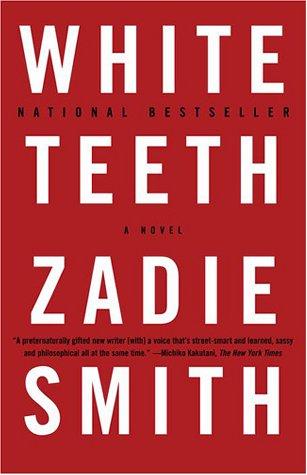
White Teeth
by Zadie Smith · 2000
Two WWII army buddies, one English and one Bangladeshi, raise their families in multicultural North London -- and their kids' generation has to figure out identity in a country that never fully lets them belong or leave.
Worth reading? White Teeth still reads as the novel that opened the door for a whole generation of British fiction about immigration and identity -- ambitious, funny, and genuinely messy in a way that matches its subject. Go in ready for sprawl, not tidiness, and it pays off.
| Author | Zadie Smith |
|---|---|
| Published | 2000 |
| Publisher | Vintage |
| Category | Fiction |
| Favorite quote | “This has been the century of strangers, brown, yellow, and white.” |
The Verdict
The genetic-engineering subplot late in the book gets the most criticism, but it’s doing real work – Smith is asking whether you can engineer a ‘perfect,’ controlled identity any more successfully than Samad could engineer a ‘pure’ one for his son. The answer, in both cases, is no.
you want the novel that redefined British fiction about immigration, race, and generational identity, with real comedy alongside the weight
you want a tight, minimalist novel -- this is sprawling and maximalist by design, juggling multiple families and timelines, which some readers find overstuffed
Book Summary
Smith uses the friendship between Archie Jones and Samad Iqbal, and then their children's very different relationships to identity, to argue that immigration and multicultural Britain create a genuinely new kind of identity -- not a clean blend, and not a simple clash, but something messier and specifically new.
Samad's attempt to send one twin son back to Bangladesh to preserve 'authentic' cultural roots backfires in ways that expose the fantasy of a pure, uncontaminated cultural identity -- both twins end up shaped by forces neither Samad nor the novel can fully control.
The novel's structural sprawl (multiple families, generations, subplots about genetic engineering and religious fundamentalism) mirrors its actual argument: modern identity in a global city is not a tidy, singular story, and Smith refuses to write it as one.
Top 7 Lessons from White Teeth
- Multicultural identity is not a clean blend of two cultures, but something genuinely new and harder to categorize.
- Attempts to preserve a 'pure' or 'authentic' cultural identity by controlling a child's environment often backfire unpredictably.
- Historical events (WWII, colonialism) continue to shape family dynamics decades later, often invisibly to the people living them.
- Comedy and real emotional weight can coexist in the same scene without undercutting each other.
- A sprawling, multi-generational structure can better represent a genuinely complex modern identity than a tidy single narrative.
- Religious and ideological certainty (in the younger generation) can be a reaction against a parent's perceived cultural compromise.
- Friendship across cultural difference doesn't erase misunderstanding, but it can outlast it.
Top 2 Quotes from White Teeth
"This has been the century of strangers, brown, yellow, and white. This has been the century of the great immigrant experiment."
Zadie Smith, White Teeth
"The past is always tense, the future perfect."
Zadie Smith, White Teeth
Frequently Asked Questions
Is White Teeth worth reading?
Yes -- it's a landmark novel in British fiction about immigration and generational identity, and it's genuinely funny alongside its ambition.
Is White Teeth hard to read?
It's long and sprawling with multiple families and timelines, which can feel overstuffed, but the prose itself is accessible and often comic.
What is the main theme of White Teeth?
That multicultural identity in modern Britain is genuinely new and complicated, not a simple blend or clash of cultures, and history keeps shaping it in unpredictable ways.
Who should read White Teeth?
Readers who want an ambitious, funny, multi-generational novel about immigration and identity, and don't mind a sprawling structure.
Ready to read it?
Get White Teeth on Amazon