Books Every Investor Should Read: 16 From Beginner to Disciplined Allocator

Updated July 16, 2026 · 16 books

Books Every Investor Should Read: 16 From Beginner to Disciplined Allocator: ranked list of 16 books

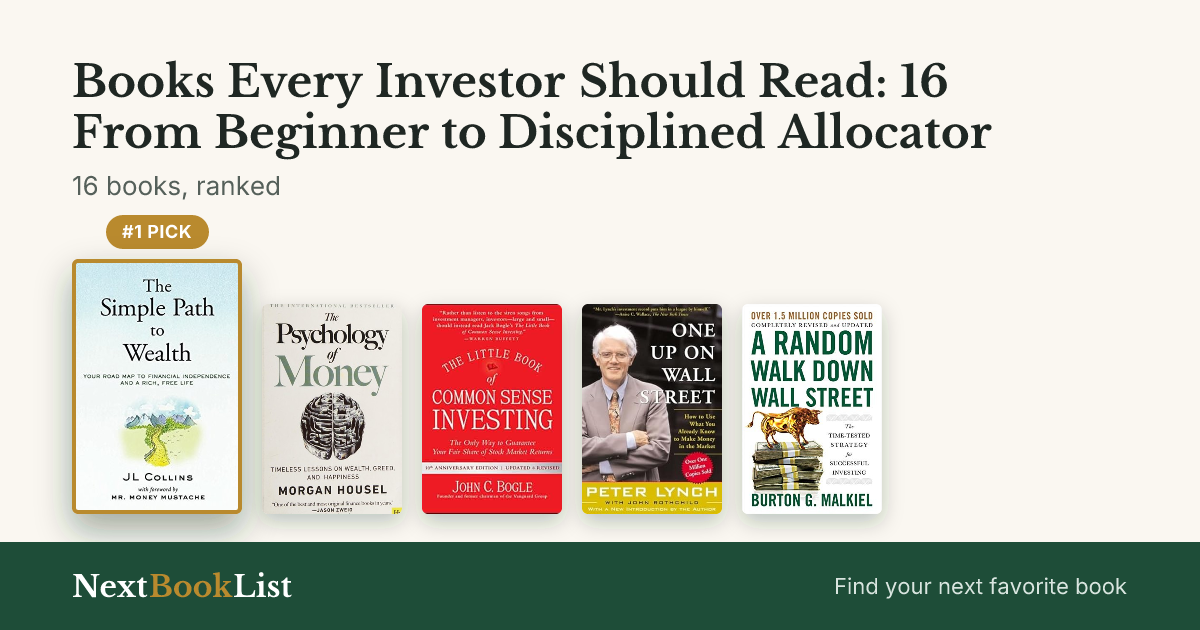
Every investor should start with The Simple Path to Wealth, because the hard part of investing isn’t picking, it’s not selling during a crash, and Collins gives you the one strategy (low-cost index funds) you can act on this week. Everything else on this list either supports or argues with that floor.

The ladder:

  1. The Simple Path to Wealth, act now.
  2. The Psychology of Money, survive your own behavior.
  3. The Little Book of Common Sense Investing, the math of why indexing wins.
  4. One Up on Wall Street & A Random Walk Down Wall Street, both sides of the stock-picking debate.
  5. The Intelligent Investor & Common Stocks and Uncommon Profits, the deep value foundation (Graham’s Mr. Market, Fisher’s scuttlebutt).
  6. Margin of Safety, The Dhandho Investor, The Little Book That Still Beats the Market, The Warren Buffett Way & You Can Be a Stock Market Genius, five practitioner takes on applying Graham’s value framework in the real world (Klarman’s is out of print and expensive, worth knowing that going in).
  7. Lords of Finance, the macro-history backdrop: how rigid expert orthodoxy helped cause the Great Depression.
  8. The Snowball. Buffett’s 900-page biography shows the whole ladder above compounding in one real career, decade by decade.
  9. The Outsiders, the allocator’s capstone: judging management by how they deploy capital.
  10. Wealth, Actually, the problem you only have once the rest of this list has worked: preserving and transferring what you’ve built.

Read them in order. Graham and Fisher wait at the top for when you’re ready to go deep; skipping to them first just produces a confused beginner with a 600-page book.

One warning: this path assumes you’ll actually invest, not just read about it. The Simple Path is actionable today, the rest is context. Do the boring thing first.

Quick Comparison

#BookBest for
1The Simple Path to WealthJL Collinsbeginners who want one clear investment strategy without jargonAmazon
2The Psychology of MoneyMorgan Houselanyone who earns money and makes decisions about it, especially beginnersAmazon
3The Little Book of Common Sense InvestingJohn C. Boglebeginners who want the shortest credible path to a lifelong investment strategyAmazon
4One Up On Wall StreetPeter Lynchinvestors who want to pick individual stocks and need a sane frameworkAmazon
5A Random Walk Down Wall StreetBurton G. Malkielinvestors who want the academic case for index funds explained clearlyAmazon
6The Intelligent InvestorBenjamin Grahamserious investors ready to learn value investing from the sourceAmazon
7Common Stocks and Uncommon ProfitsPhilip A. Fisherlong-term investors who want to evaluate business quality, not just priceAmazon
8Margin of SafetySeth Klarmanyou're a serious value investor who wants Klarman's risk-first framework, and you're willing to pay a premium or find a library copy since it's long out of printAmazon
9The Dhandho InvestorMohnish Pabraiyou want value investing explained through simple bets, not spreadsheets and jargonAmazon
10The Little Book That Still Beats the MarketJoel Greenblattyou want a rules-based, quantitative way to pick individual stocks instead of picking by gut feelAmazon
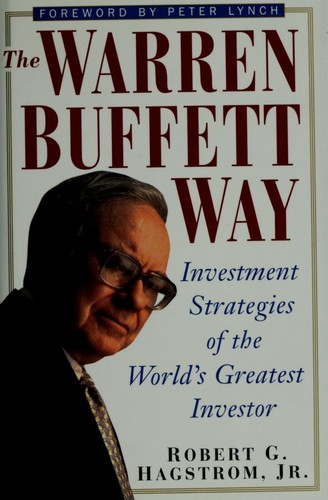
11The Warren Buffett WayRobert G. Hagstromyou want a structured, case-study breakdown of Buffett's actual investing criteria and reasoning, not just his famous quotesAmazon
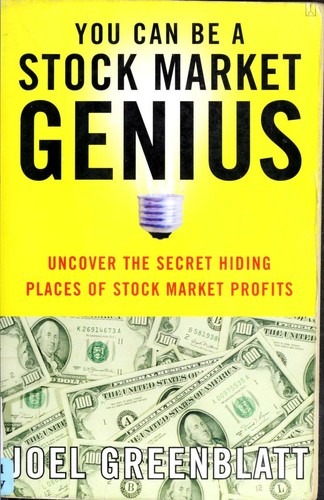
12You Can Be a Stock Market GeniusJoel Greenblattyou're an experienced investor looking for specific, less-crowded strategies (spinoffs, risk arbitrage, post-bankruptcy equities) beyond standard buy-and-hold value investingAmazon
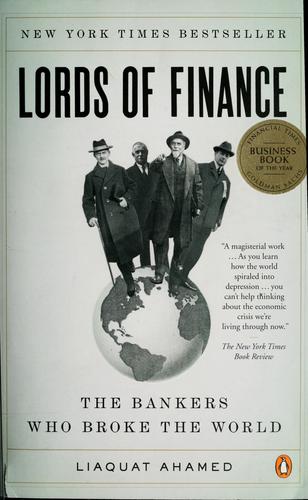
13Lords of FinanceLiaquat Ahamedreaders who want to understand monetary policy through the story of the people who wielded it badlyAmazon
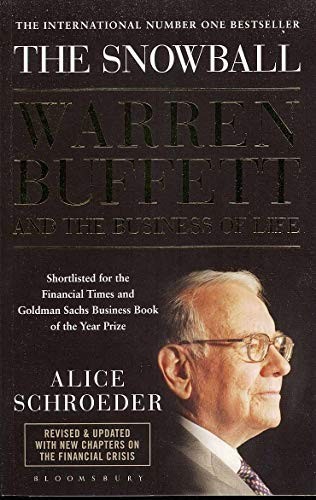
14The SnowballAlice Schroederinvestors who want to understand Buffett the person, not just his lettersAmazon
15The OutsidersWilliam N. Thorndikeinvestors and operators who want to understand capital allocationAmazon
16Wealth, ActuallyFrazer Ricehigh-net-worth individuals and families navigating estate, fiduciary, and legacy decisions for the first timeAmazon

The Books

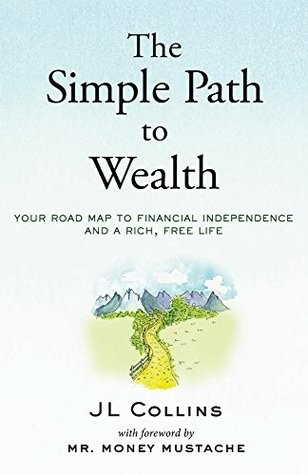
The Simple Path to Wealth by JL Collins book cover

1. The Simple Path to Wealth

JL Collins · 2016

Buy the index fund. Keep buying it. Ignore everything else. A whole book proving why that works.

Started as letters to his daughter, and it reads that way: patient, plain, and certain. Collins makes the case for VTSAX-style total market index investing better than anyone, including why market crashes are expected events, not emergencies. If you read exactly one investing book and then act on it, make it this one.

Read it if: beginners who want one clear investment strategy without jargon

Skip it if: you enjoy picking stocks and want to be talked out of index funds (you won't be)
Full verdict: The Simple Path to Wealth →

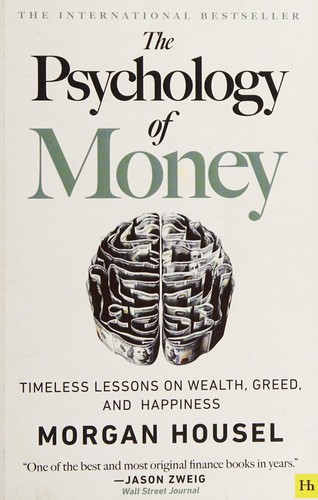
The Psychology of Money by Morgan Housel book cover

2. The Psychology of Money

Morgan Housel · 2020

Money decisions are behavior problems, not math problems. This book proves it in 19 short stories.

Housel writes like a friend who happens to be one of the best finance writers alive. Each chapter is a standalone essay: why rich people go broke, why enough beats more, why time beats timing. No formulas, no jargon. It changes how you think about money rather than what you do with it this week, which is exactly why it sticks.

Read it if: anyone who earns money and makes decisions about it, especially beginners

Skip it if: you want tactical advice like which funds to buy (this book is deliberately not that)

Full verdict: The Psychology of Money →

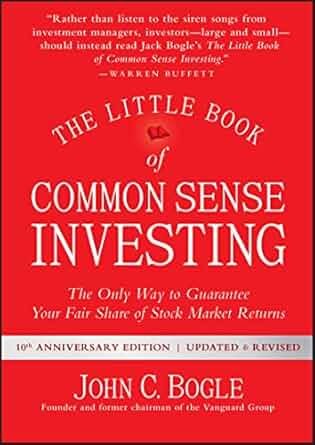
The Little Book of Common Sense Investing by John C. Bogle book cover

3. The Little Book of Common Sense Investing

John C. Bogle · 2007

The index fund pitch from the man who invented the index fund.

Bogle founded Vanguard and created the first index fund, then spent fifty years watching the math prove him right. Costs compound against you, few managers beat the market after fees, and owning the whole market wins by default. Two hundred small pages. You can finish it in an afternoon and act on it the same day.

Read it if: beginners who want the shortest credible path to a lifelong investment strategy

Skip it if: you've already read Collins or Malkiel (same conclusion, same math)

Full verdict: The Little Book of Common Sense Investing →

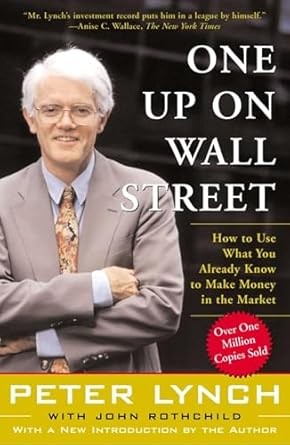
One Up On Wall Street by Peter Lynch book cover

4. One Up On Wall Street

Peter Lynch · 1989

The everyday investor's edge, explained by the man who ran the best fund of his era.

Lynch ran Fidelity Magellan to 29% annual returns and wrote the friendliest serious investing book ever. Buy what you know, do the homework anyway, and know which of his six stock categories you’re holding. Some examples aged out. The discipline (understand the story before you buy the ticker) never will.

Read it if: investors who want to pick individual stocks and need a sane framework

Skip it if: you've decided on index funds (Lynch himself would say that's fine)

Full verdict: One Up On Wall Street →

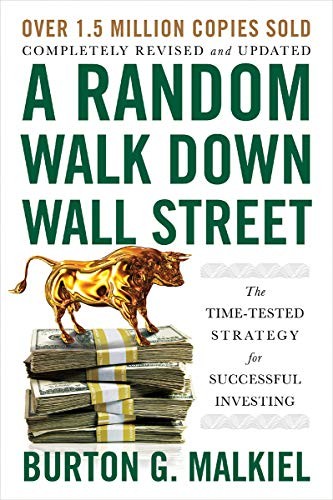
A Random Walk Down Wall Street by Burton G. Malkiel book cover

5. A Random Walk Down Wall Street

Burton G. Malkiel · 1973

Fifty years of editions, one conclusion: you probably can't beat the market, so own all of it.

Malkiel walks through every strategy people use to beat the market (technical analysis, stock picking, market timing) and shows why each fails for most people most of the time. Updated constantly since 1973, and each edition’s new bubble chapter proves the old chapters right. The intellectual foundation under the entire index fund movement.

Read it if: investors who want the academic case for index funds explained clearly

Skip it if: you want a short read (it's comprehensive, which means long)

Full verdict: A Random Walk Down Wall Street →

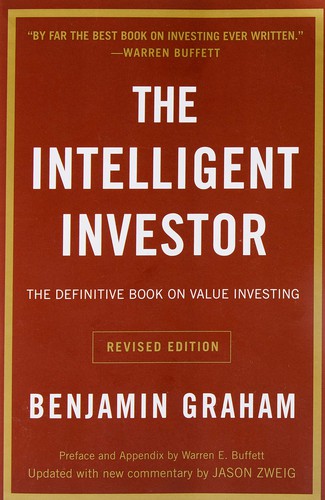
The Intelligent Investor by Benjamin Graham book cover

6. The Intelligent Investor

Benjamin Graham · 1949

Warren Buffett calls it the best book on investing ever written. He's not wrong.

Seventy-five years old and still the foundation of value investing. Graham gives you two ideas worth the whole book: Mr. Market, the manic business partner you should exploit rather than follow, and margin of safety, the discipline of buying below value. The Jason Zweig commentary in the revised edition translates 1949 examples into modern terms. Chapters 8 and 20 alone justify the price.

Read it if: serious investors ready to learn value investing from the source

Skip it if: you want a quick, easy read (it's dense, and beginners should start with simpler books)

Full verdict: The Intelligent Investor →

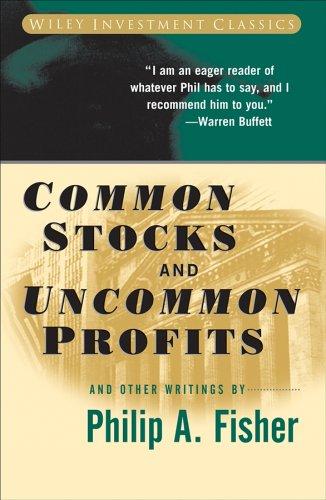
Common Stocks and Uncommon Profits by Philip A. Fisher book cover

7. Common Stocks and Uncommon Profits

Philip A. Fisher · 1958

The growth investing classic Buffett says shaped him almost as much as Graham did.

Fisher’s fifteen points for finding outstanding companies and his “scuttlebutt” method (ask customers, suppliers, and competitors what they think) are still how the best quality investors work. Buffett describes himself as mostly Graham plus a meaningful dose of Fisher. Dry in places, permanent in substance.

Read it if: long-term investors who want to evaluate business quality, not just price

Skip it if: you're new to investing (start with Graham or an index fund book first)

Full verdict: Common Stocks and Uncommon Profits →

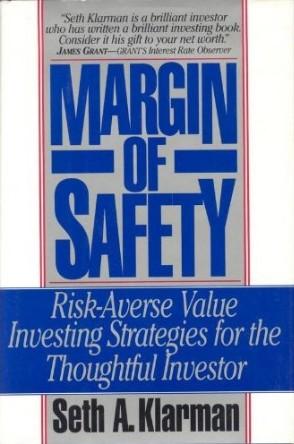
Margin of Safety by Seth Klarman book cover

8. Margin of Safety

Seth Klarman · 1991

The out-of-print value-investing classic that now sells for hundreds of dollars used, written by a hedge fund manager who never bothered with a second printing.

The scarcity is real, so don’t assume you’ll casually pick this up – check a library or a PDF from a legitimate source before paying collector prices for a used copy. What you’re paying for either way is a genuinely rigorous risk-first framework that most value-investing books, focused on upside first, don’t emphasize nearly as hard.

Read it if: you're a serious value investor who wants Klarman's risk-first framework, and you're willing to pay a premium or find a library copy since it's long out of print

Skip it if: you're a beginner or want an affordable, in-print option, this book is notoriously expensive secondhand; The Intelligent Investor covers foundational value-investing ground that's more accessible and still in print

Full verdict: Margin of Safety →

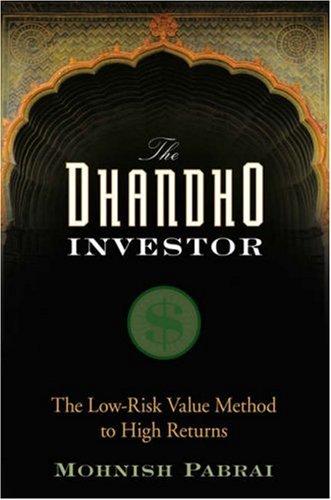
The Dhandho Investor by Mohnish Pabrai book cover

9. The Dhandho Investor

Mohnish Pabrai · 2007

Heads I win, tails I don't lose much -- value investing explained by a guy who actually made money doing it.

Pabrai isn’t shy about where his ideas come from – Buffett and Munger, filtered through immigrant motel owners who bet the whole family on one property and won by being conservative, not reckless. The book works because it strips value investing down to a repeatable habit of mind: find the bets where you can’t lose much, then bet big.

Read it if: you want value investing explained through simple bets, not spreadsheets and jargon

Skip it if: you want a rigorous academic treatment of valuation -- this is a philosophy book with stories, not a modeling course

Full verdict: The Dhandho Investor →

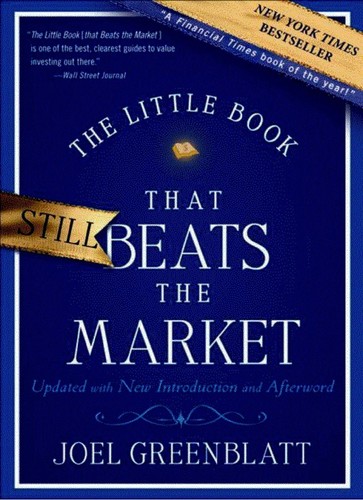
The Little Book That Still Beats the Market by Joel Greenblatt book cover

10. The Little Book That Still Beats the Market

Joel Greenblatt · 2010

A formula for picking stocks, explained simply enough that Greenblatt tested it on his own kids.

Greenblatt wrote this so plainly he tested the explanation on his own children, and it shows – there’s no jargon standing between you and the two numbers that drive the whole strategy. The honesty about the formula’s bad years is what separates this from the usual “beat the market” pitch.

Read it if: you want a rules-based, quantitative way to pick individual stocks instead of picking by gut feel

Skip it if: you've already decided you'd rather own the whole market than pick stocks -- this book won't talk you out of indexing

Full verdict: The Little Book That Still Beats the Market →

The Warren Buffett Way by Robert G. Hagstrom book cover

11. The Warren Buffett Way

Robert G. Hagstrom · 1994

The most readable breakdown of how Buffett actually picks stocks, written by an outside analyst, not Buffett himself, which is exactly why it explains the method so clearly.

Hagstrom’s outsider vantage is actually the book’s advantage – he can organize and name Buffett’s implicit criteria in a way Buffett, working intuitively after decades of practice, never bothered to formalize himself. Pair it with The Intelligent Investor for the full arc from theory to real-world application.

Read it if: you want a structured, case-study breakdown of Buffett's actual investing criteria and reasoning, not just his famous quotes

Skip it if: you want Buffett in his own words, this is Hagstrom's analysis of Buffett's method, not a memoir or collection of his letters; The Intelligent Investor is the book Buffett himself credits as foundational to his approach

Full verdict: The Warren Buffett Way →

You Can Be a Stock Market Genius by Joel Greenblatt book cover

12. You Can Be a Stock Market Genius

Joel Greenblatt · 1997

A hedge fund manager's guide to overlooked, unglamorous corners of the market, spinoffs, mergers, bankruptcies, where the pros aren't looking as hard.

Greenblatt writes from real fund-management experience, and the specificity shows – this isn’t general philosophy, it’s a hunting guide for particular market inefficiencies most investors never think to look for. Read it once you’ve got the fundamentals down; it’s the advanced elective, not the intro course.

Read it if: you're an experienced investor looking for specific, less-crowded strategies (spinoffs, risk arbitrage, post-bankruptcy equities) beyond standard buy-and-hold value investing

Skip it if: you're a beginner investor, this assumes real familiarity with financial statements and market mechanics; start with The Intelligent Investor or One Up on Wall Street first

Full verdict: You Can Be a Stock Market Genius →

Lords of Finance by Liaquat Ahamed book cover

13. Lords of Finance

Liaquat Ahamed · 2009

The Pulitzer-winning history of the four central bankers whose decisions helped cause the Great Depression.

Ahamed turns central banking history into a genuine character study: four powerful men, each convinced of their own orthodoxy, whose collective decisions after World War I helped set up the Great Depression. It’s history, not a how-to, but the pattern, confident experts, rigid rules, no room for the unexpected, is exactly why it’s still cited in monetary-policy debates today. Skip it if you want current tactical advice rather than a century-old cautionary tale.

Read it if: readers who want to understand monetary policy through the story of the people who wielded it badly

Skip it if: you want a technical economics textbook rather than narrative history

Full verdict: Lords of Finance →

The Snowball by Alice Schroeder book cover

14. The Snowball

Alice Schroeder · 2008

The authorized biography of Warren Buffett, the making of the world's greatest investor.

Schroeder’s Snowball is the definitive Buffett biography: patience, compounding, and character over flash. Long, but the clearest window into how he thinks. Skip it if you only want ticker-level strategy.

Read it if: investors who want to understand Buffett the person, not just his letters

Skip it if: you've read Berkshire letters and want only the investing math

Full verdict: The Snowball →

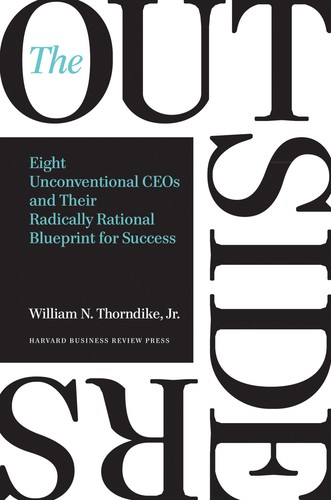
The Outsiders by William N. Thorndike book cover

15. The Outsiders

William N. Thorndike · 2012

Eight CEOs who crushed the market by ignoring everything CEOs are supposed to do.

Thorndike profiles eight unconventional CEOs (Henry Singleton, Katharine Graham, John Malone) who treated capital allocation as the CEO’s real job: buy back cheap stock, avoid dilution, decentralize everything. Buffett recommended it at a Berkshire meeting and it became an operator cult classic. Deservedly.

Read it if: investors and operators who want to understand capital allocation

Skip it if: you want leadership inspiration (these CEOs were ruthless calculators, not visionaries)

Full verdict: The Outsiders →

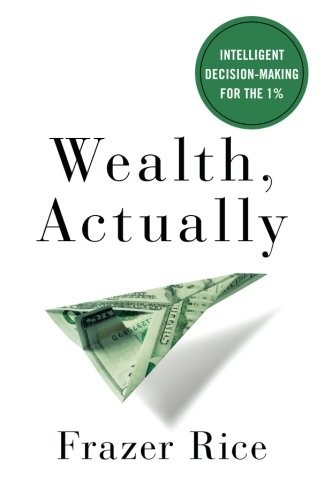
Wealth, Actually by Frazer Rice book cover

16. Wealth, Actually

Frazer Rice · 2018

A private wealth manager's guide to the decisions, estate, fiduciary, family, that matter once you have real assets to protect.

Wealth, Actually is a narrower book than most personal-finance titles: it’s not about building wealth, it’s about the decisions that come after, estate planning, fiduciary relationships, and preserving what you’ve built across generations. Rice writes from fifteen years advising wealthy families, and the book is most useful as an orientation guide to problems most readers haven’t faced yet. Skip it if you’re still in the accumulation phase; this book assumes the wealth already exists.

Read it if: high-net-worth individuals and families navigating estate, fiduciary, and legacy decisions for the first time

Skip it if: you're still building wealth rather than preserving and transferring it

Full verdict: Wealth, Actually →

Frequently Asked Questions

What is the first book every investor should read?

The Simple Path to Wealth. One strategy, low-cost index funds, explained plainly, and you can act on it this week. It's the floor every other investing book builds on or argues against.

In what order should a new investor read these?

Simple Path (act now) → Psychology of Money (behavior) → Little Book (the math of indexing) → One Up on Wall Street and Random Walk (both sides of stock-picking) → Intelligent Investor and Common Stocks (the deep value foundation) → The Outsiders (capital allocation as the investor's capstone).

Is The Intelligent Investor a first book?

No. It's dense, 1949, and best approached after you already index. Read it once you want to understand why value investing works and to absorb Graham's Mr. Market and margin-of-safety ideas. Chapters 8 and 20 are the famous ones.

What does The Outsiders add for an investor?

The allocator's view. Thorndike shows CEOs who beat the market not by operations but by disciplined capital deployment. For an investor, it's the lens for judging management, the single most useful skill after asset allocation itself.

Why is Lords of Finance on an investing list? It's a history book.

Because it's the clearest account of how confident experts following rigid rules (the gold standard) can still walk an entire economy into the Great Depression. It's the macro-history backdrop for every crash-and-recovery pattern the rest of this list assumes you can ride out.

Who is Wealth, Actually for, and why is it last?

It's for once you've actually accumulated meaningful wealth. Frazer Rice's private-wealth-management guide to estate planning, fiduciary structures, and preserving what you've built across generations. It's last because it's the only book here about a problem you don't have until the rest of the list has worked.

Keep Reading