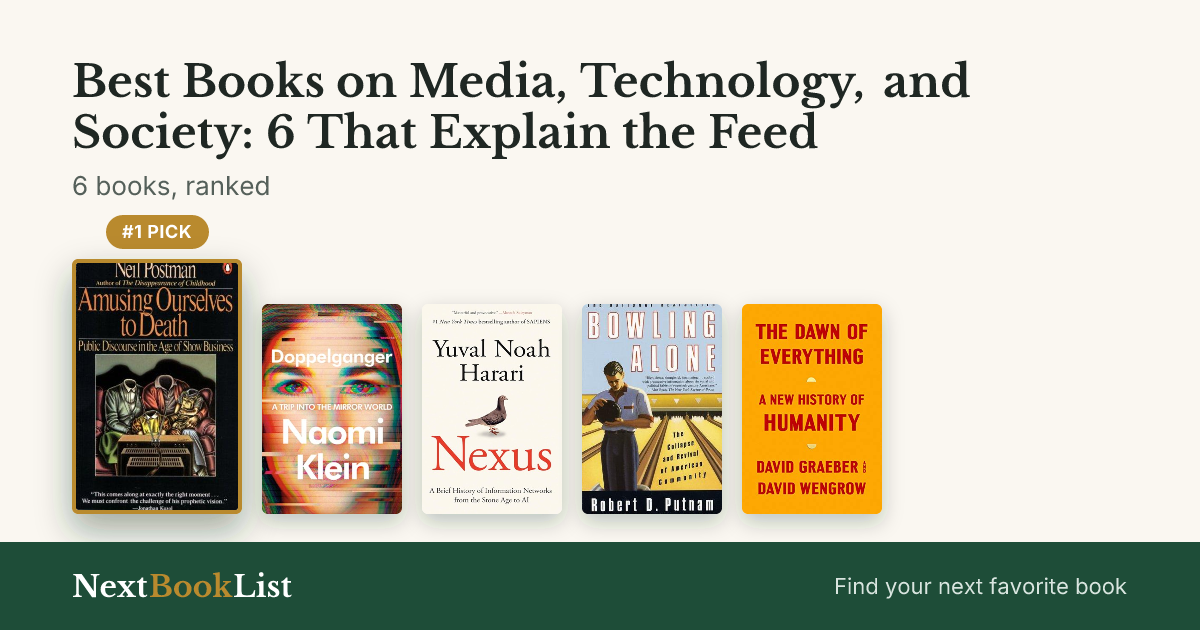
Best Books on Media, Technology, and Society: 6 That Explain the Feed

Updated July 15, 2026 · 6 books

Best Books on Media, Technology, and Society: 6 That Explain the Feed: ranked list of 6 books

Start with Amusing Ourselves to Death. Neil Postman wrote it in 1985 about how television was replacing public discourse with entertainment, and the eerie part is how directly it predicts the internet without ever mentioning it. Every other book on this list is, in some sense, still arguing with this one.

Nexus is the modern counterpart, four decades later — Yuval Noah Harari on how information networks, now including AI, have always shaped human societies, and what changes when the network gets faster than the humans inside it. Doppelganger sits between them chronologically in argument if not in publication: Naomi Klein’s account of being mistaken online for someone with wildly different politics, used as a lens into how the same internet produces incompatible versions of reality for different people. Original Sin, the newest book here, brings the throughline to 2025 — a political account of how institutional messaging and media control shaped a single recent moment.

Bowling Alone and The Dawn of Everything are the wider-angle entries. Bowling Alone documents the decline of American social capital — clubs, civic groups, shared institutions — that predates the internet but explains a lot of what the internet then accelerated. The Dawn of Everything goes furthest back of anything on this list, a revisionist history of human civilization that questions whether centralization and hierarchy were ever as inevitable as modern institutions assume.

The range here is real — 1985 to 2025, TV to AI — and that’s not a flaw. The throughline is media and institutions shaping what people believe, and that argument hasn’t changed nearly as much as the technology delivering it.

Quick Comparison

#BookBest for
1Amusing Ourselves to DeathNeil Postmanyou want the sharpest, earliest argument for why entertainment-first media degrades serious public discourse -- written about television in 1985, and repeatedly cited as having predicted the internet and social media era almost exactlyAmazon
2DoppelgangerNaomi Kleinyou want to understand how legitimate distrust of Big Tech, pharma, and elites curdles into conspiracy culture without getting talked out of caring about the underlying problemsAmazon
3NexusYuval Noah Harariyou want Harari's big-picture framework for thinking about AI risk without the sci-fi hypeAmazon
4Bowling AloneRobert D. Putnamyou want the definitive, data-driven account of why American civic and social engagement declined through the late 20th century, and why that decline matters more than it sounds like it shouldAmazon
5The Dawn of EverythingDavid Graeber, David Wengrowyou've read Sapiens or Guns, Germs, and Steel and want the direct, well-researched pushback -- Graeber and Wengrow argue early human societies were far more politically experimental and deliberately anti-hierarchical than the standard progress narrative allowsAmazon
6Original SinJake Tapper and Alex Thompsonyou want the reported, on-the-record version of the 2024 cover-up story, not the cable-news shouting match versionAmazon

The Books

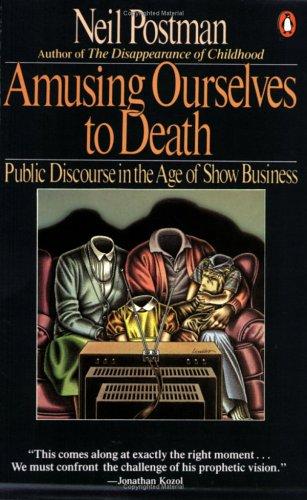
Amusing Ourselves to Death by Neil Postman book cover

1. Amusing Ourselves to Death

Neil Postman · 1985

Neil Postman argued in 1985 that TV was turning politics, news, and religion into entertainment -- and that we should have worried less about Orwell's boot and more about Huxley's screen.

Postman died in 2003, well before smartphones and social media existed, so every “this predicted TikTok” comparison you’ll see attached to this book is a later reader’s extrapolation, not something Postman claimed himself. That the extrapolation holds up as well as it does is the real reason this book has stayed in print for almost 40 years instead of aging into a dated TV-era artifact.

Read it if: you want the sharpest, earliest argument for why entertainment-first media degrades serious public discourse -- written about television in 1985, and repeatedly cited as having predicted the internet and social media era almost exactly

Skip it if: you want specific, contemporary media criticism -- Postman's examples are entirely TV-era (game shows, network news broadcasts), so you'll need to do the translation to smartphones and social media yourself, even though the underlying argument transfers cleanly
Full verdict: Amusing Ourselves to Death →

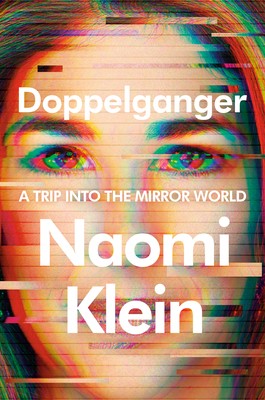
Doppelganger by Naomi Klein book cover

2. Doppelganger

Naomi Klein · 2023

Naomi Klein keeps getting mistaken online for Naomi Wolf -- and uses the confusion to map how real grievances get hijacked into conspiracy theory.

Klein’s smartest move is refusing to simply mock the conspiracy-minded people she’s writing about. She takes their underlying grievances seriously – corporate power, surveillance, pharma influence – and spends the book asking why that legitimate anger keeps getting funneled toward the wrong targets instead of the right ones.

It runs long, and the sections on her own family history and identity won’t be what every reader came for. But “diagonalism” is a genuinely useful term for something you’ve probably noticed and didn’t have a name for, and that alone makes the digressions worth sitting through.

Read it if: you want to understand how legitimate distrust of Big Tech, pharma, and elites curdles into conspiracy culture without getting talked out of caring about the underlying problems

Skip it if: you want a straightforward media-criticism book -- this one is personal, digressive, and built around Klein's own identity as much as it is a systemic analysis

Full verdict: Doppelganger →

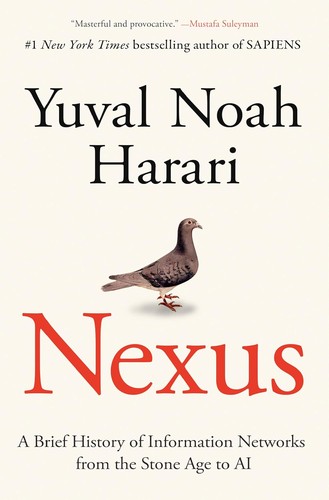
Nexus by Yuval Noah Harari book cover

3. Nexus

Yuval Noah Harari · 2024

More information has never meant more truth -- and AI is the first information technology that can make decisions without us.

Harari’s real trick is reframing the AI conversation away from “will the robots turn evil” and toward “will our institutions still be able to catch their own mistakes.” That’s a more useful question, and it’s the one Nexus actually spends its pages on.

The book is baggier than Sapiens – the AI chapters lean more speculative than historical – but the core idea (self-correction, not information volume, is what keeps a society sane) is worth the price of admission on its own.

Read it if: you want Harari's big-picture framework for thinking about AI risk without the sci-fi hype

Skip it if: you already read Sapiens and Homo Deus and want something narrower than another sweeping civilizational thesis

Full verdict: Nexus →

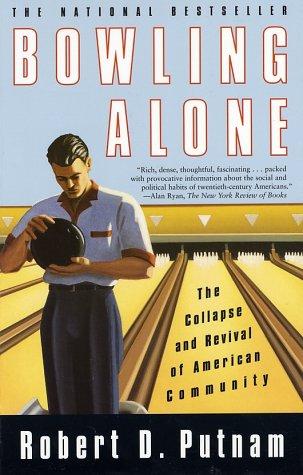
Bowling Alone by Robert D. Putnam book cover

4. Bowling Alone

Robert D. Putnam · 2000

Robert Putnam's data-heavy case that Americans stopped joining clubs, unions, and bowling leagues -- and that the resulting collapse in social capital costs democracy more than it looks like.

Putnam later wrote a shorter, more prescriptive follow-up focused on solutions, since Bowling Alone itself is heavier on diagnosis than remedy. Worth knowing going in if you want the fix as much as the data – this book is the argument for why the problem matters, not primarily a playbook for solving it.

Read it if: you want the definitive, data-driven account of why American civic and social engagement declined through the late 20th century, and why that decline matters more than it sounds like it should

Skip it if: you want something current on smartphones and social media -- this was published in 2000, before either existed at scale, so it's the foundational diagnosis of the trend, not an account of its most recent (and arguably worse) chapter

Full verdict: Bowling Alone →

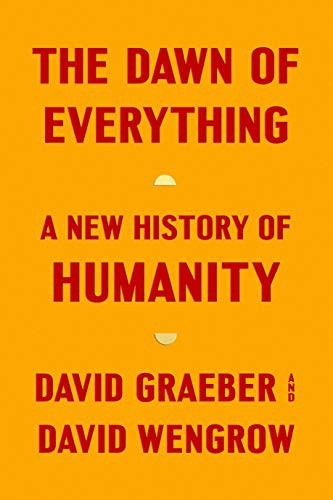
The Dawn of Everything by David Graeber, David Wengrow book cover

5. The Dawn of Everything

David Graeber, David Wengrow · 2021

David Graeber and David Wengrow argue the standard story of human social evolution -- band to tribe to chiefdom to state -- is mostly wrong, and the archaeology proves it.

Graeber died unexpectedly just weeks before the book’s publication in 2021, after roughly a decade of collaboration with Wengrow, which gives the book’s closing chapters an unintended weight as his last major work. Wengrow has continued defending and extending its arguments in the anthropology community since.

Read it if: you've read Sapiens or Guns, Germs, and Steel and want the direct, well-researched pushback -- Graeber and Wengrow argue early human societies were far more politically experimental and deliberately anti-hierarchical than the standard progress narrative allows

Skip it if: you want a tidy, linear story of human social development -- this book's entire point is that the tidy linear story is wrong, so it trades a clean narrative for a messier, more accurate (and more contested) one

Full verdict: The Dawn of Everything →

Original Sin by Jake Tapper and Alex Thompson book cover

6. Original Sin

Jake Tapper and Alex Thompson · 2025

The inside account of how Joe Biden's closest aides hid his decline from the country, and from him.

Tapper and Thompson didn’t write a takedown – they wrote a timeline, and the timeline is the indictment. What makes it land is the restraint: they let sources on the record describe specific moments instead of reaching for adjectives, which makes the cumulative picture harder to dismiss as spin from either side.

The book’s real subject isn’t Biden’s age. It’s what happens when an inner circle decides the public doesn’t get a vote on how much truth it receives. If you want the fullest, most carefully sourced version of that story, this is it.

Read it if: you want the reported, on-the-record version of the 2024 cover-up story, not the cable-news shouting match version

Skip it if: you've already read every excerpt and interview and don't need the full 300-plus pages of sourcing to believe the thesis

Full verdict: Original Sin →

Frequently Asked Questions

What is the best book on media and technology to start with?

Amusing Ourselves to Death. Neil Postman wrote it in 1985, about television turning public discourse into entertainment, and it reads like it was written about the internet instead. It's the anchor book on this list — everything published since is arguably still answering it.

These books span 40 years. Is there an actual throughline?

Yes: how media and institutions reshape what people believe and trust, whether the medium is 1980s TV or a 2025 algorithmic feed. Amusing Ourselves to Death and Nexus are making versions of the same argument four decades apart — read them together and the continuity is the point.

What's the best book on modern conspiracy culture and online identity?

Doppelganger. Naomi Klein was repeatedly mistaken online for a conspiracy theorist with a similar name, and used that confusion as a way into the wider collapse of shared reality — how the same facts produce entirely different worldviews depending on which internet you live in.

Is The Dawn of Everything actually about media and technology?

Indirectly — it's a revisionist history of human civilization, not a tech book. It's on this list because it undercuts the assumption the rest of the list runs on: that social structures inevitably centralize and scale the way modern institutions do. It's the widest-angle book here.

Keep Reading