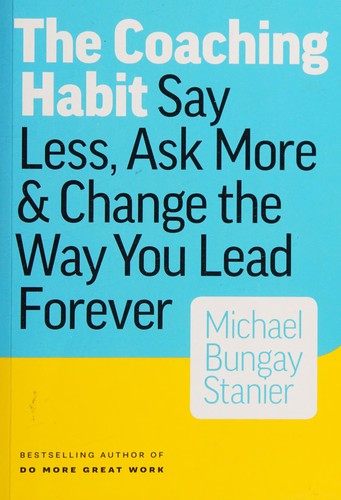
The best management book is The Coaching Habit, because the fix is faster than anything else on this list: ask a question instead of giving an answer, seven times, and you’ve broken the habit that turns managers into bottlenecks. Read it before anything with a bigger framework.
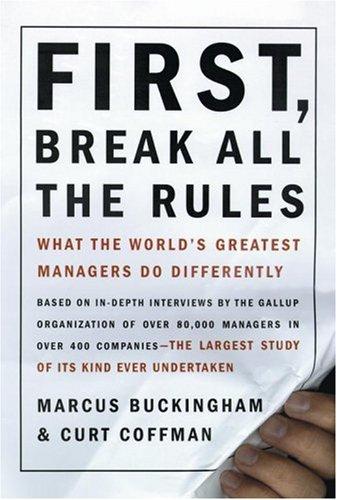
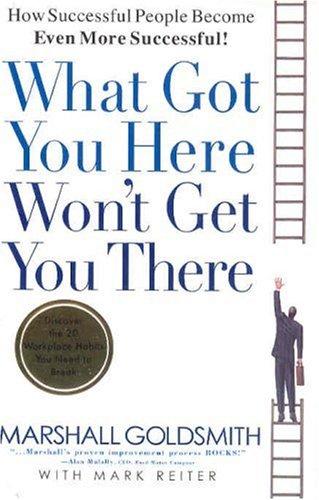
First, Break All the Rules and What Got You Here Won’t Get You There cover the two most common structural mistakes: not adapting your approach to each person’s actual strengths, and not adapting your own behavior once your job changed from doing to enabling. Both are built on real research into what actually derails otherwise-capable managers.
The Effective Executive and Emotional Intelligence supply the older, deeper layer underneath the tactics. Drucker on getting the right things done at all; Goleman on why self-awareness and empathy predict management success better than raw intelligence.
Close with The 80/20 Principle, Financial Intelligence, and Setting the Table. Koch on prioritization, Berman and Knight on closing the numbers-literacy gap most managers never fix, and Danny Meyer on the harder-to-train skill of making people feel cared for, not just managed.
Three more for the specific traps every manager eventually hits. The One Minute Manager Meets the Monkey names the exact reason your calendar disappears, other people’s unsolved problems keep landing on your back. Turn the Ship Around! flips command-and-control into a model where the team is trained and trusted to decide, not just told what to do. High Output Management closes the list because it’s still the clearest, least fluffy definition of what a manager’s job actually is: the output of the team, not your own.
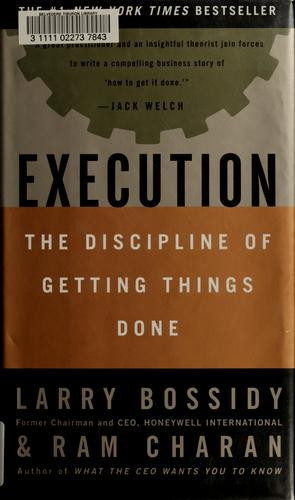
Five more for process and follow-through specifically. The One Minute Manager is the older, shorter cousin of the coaching-question approach, still useful as a fifteen-minute refresher. The Toyota Way explains the manufacturing discipline (continuous improvement, respect for people) that most modern “lean” management language actually traces back to. Reengineering the Corporation is the 90s case for redesigning a process end-to-end instead of patching each step. First Things First is Covey’s prioritization framework taken further than a to-do list, sorting by importance, not urgency. Execution closes it out with Bossidy and Charan’s blunt argument that most strategies fail not from bad ideas but from nobody actually driving the follow-through.
One warning: management books are where people collect frameworks and never change a single one-on-one conversation. Pick one question from Coaching Habit and use it this week, that’s worth more than finishing all six books.
Kenneth H. Blanchard · 1989
The sequel that explains exactly why your calendar disappears -- other people's unsolved problems keep jumping onto your back, one 'monkey' at a time.
A tiny 130-page fable about why your time disappears: other people’s problems (monkeys) keep jumping onto your back. Read it if you’re a manager who feels buried. Skip it if you already delegate cleanly, this is one metaphor stretched to a booklet.
Read it if: you're a manager who feels buried in other people's problems and can't figure out where your day went
Skip it if: you already delegate cleanly -- this is one sharp metaphor stretched to a 130-page booklet, and if you've internalized it, there's little else here
Full verdict: The One Minute Manager Meets the Monkey →
L. David Marquet · 2012
A submarine captain inherited the worst-performing crew in the fleet and turned it into the best, not through better orders, but by giving every sailor authority to decide.
Marquet’s submarine story flips command-and-control into ‘leader-leader’, every crew member authorized to decide. Read it before you micromanage your team; skip it if you run a one-person shop where the model can’t breathe.
Read it if: you keep micromanaging a team and want a tested model for pushing real decision authority down instead
Skip it if: you run a one-person operation with no one to delegate to -- the leader-leader model needs a team to actually breathe
Full verdict: Turn the Ship Around! →
Kenneth Blanchard & Spencer Johnson · 1982
The original, a 100-page management parable built on three techniques, and the book that launched a whole One Minute Manager franchise, including the monkey-focused sequel already on this site.
Blanchard and Johnson built the book’s brevity into its own argument – a management book about the power of short, immediate feedback that takes an hour to read is making its point through its own form. If you’ve already got the sequel on delegation, this fills in the foundational three techniques it assumes you know.
Read it if: you want the shortest, simplest possible introduction to feedback-based management before diving into anything more complex
Skip it if: you've read The One Minute Manager Meets the Monkey, that sequel covers delegation specifically and builds on this book's foundation, so reading both back to back can feel repetitive on the core framework
Full verdict: The One Minute Manager →
Jeffrey K. Liker · 2004
Toyota didn't win with a better car. It won with a better way of thinking about work.
Liker wasn’t hired by Toyota to write a puff piece – he’s an industrial engineering professor who spent years inside their plants trying to figure out why nobody could successfully copy their system despite Toyota publishing plenty of it openly. The answer, laid out here, is that companies copy the tools and skip the philosophy underneath them.
Read it if: you run operations, manufacturing, or any process and want the real source of 'lean,' not the diluted consultant version
Skip it if: you just want a quick lean checklist -- this is a deep, academic dive into 14 principles, not a quick-start guide
Full verdict: The Toyota Way →
Michael Hammer & James Champy · 1993
The book that made 'reengineering' a 1990s corporate buzzword, and a cautionary tale about how a genuinely useful idea got hijacked into a euphemism for layoffs.
This is a book worth reading partly as a warning: a genuinely useful idea (redesign processes around outcomes, not legacy structure) got hijacked into corporate-speak for layoffs within a few years of publication, and Hammer later spoke publicly about how far the practice had drifted from the argument. Read the actual thesis with fresh eyes, separate from the baggage the word picked up.
Read it if: you want the historical source of process-redesign thinking and a case study in how a legitimate management idea gets distorted in corporate practice
Skip it if: you want a book untainted by baggage , 'reengineering' became so associated with downsizing in the 1990s that many practitioners avoid the term entirely today, even while still using its underlying ideas
Full verdict: Reengineering the Corporation →
Stephen R. Covey, A. Roger Merrill & Rebecca R. Merrill · 1994
The Covey follow-up that ditched to-do lists for a time-management matrix built around what actually matters, not what's loudest.
The four-quadrant matrix is the single idea worth extracting even if you never read the full book – most productivity problems really are a quadrant-two starvation problem, not a scheduling-software problem. If you’ve already absorbed The 7 Habits deeply, treat this as an optional deep-dive rather than a must-read.
Read it if: you're constantly busy with urgent tasks but feel like your important goals never move, the Eisenhower/Covey matrix fixes exactly that gap
Skip it if: you've already internalized the 7 Habits' 'put first things first' habit deeply, this book is a full expansion of just that one habit, and can feel repetitive if you want new material
Full verdict: First Things First →
Frequently Asked Questions
What is the best management book to start with?
The Coaching Habit. Michael Bungay Stanier's seven questions replace the instinct to jump in and solve everyone's problem for them, which is the single most common failure mode of new managers. It's short, immediately usable, and fixes the habit that causes the most damage.
I was just promoted and I'm still doing my old job instead of managing. What do I read?
What Got You Here Won't Get You There. Goldsmith's whole thesis is that the habits that got you promoted, being the best individual doer in the room, actively work against you once your job is other people's output, not your own.
Is First, Break All the Rules outdated? It's Gallup research from the 90s.
The research holds up better than most management advice from that era, because it's built on studying what great managers actually do differently, not theory. Focus on strengths, set different expectations for each person, still the core finding, still contrarian in most workplaces.
Why is The 80/20 Principle on a management list?
Because most bad management is really a prioritization failure, managing everything equally instead of noticing that 20% of your team's work drives 80% of the results. Koch's framework applies as directly to managing people's time as it does to your own.
I manage people but I'm not confident reading our financials. What do I read?
Financial Intelligence. Berman and Knight close the exact gap most non-finance managers have, reading a P&L or balance sheet without an accounting degree, and the book is honest that a lot of accounting is judgment calls, not pure fact.
Setting the Table is about restaurants. Why is it on a general management list?
Because Danny Meyer's distinction between service and hospitality, doing things right versus making someone feel like you're on their side, applies to managing any team, not just a dining room. It's one of the few management books actually built around how people feel, not just what they produce.
I'm buried in other people's problems and can't figure out where my day went. What do I read?
The One Minute Manager Meets the Monkey. Blanchard's short fable names the exact trap: every unsolved problem someone brings you is a 'monkey,' and accepting it without a proposed next step means you just volunteered for their work.
What is the single clearest definition of what a manager actually produces?
High Output Management. Andy Grove's 1983 Intel playbook defines a manager's output as the output of the team and decisions they influence, not their own individual work, still the sharpest answer to 'what does a manager actually do' four decades later.