Best World History Books: 7 That Cover the Whole Board

Updated July 15, 2026 · 7 books

Best World History Books: 7 That Cover the Whole Board: ranked list of 7 books

Start with Guns, Germs, and Steel. Jared Diamond takes on the question that most history books quietly assume an answer to — why Eurasian societies ended up dominating the Americas, Africa, and Australia rather than the other way around — and answers it with geography, agriculture, and disease instead of any claim about which peoples were inherently more capable. It’s the book that makes every other history book on this list make more sense.

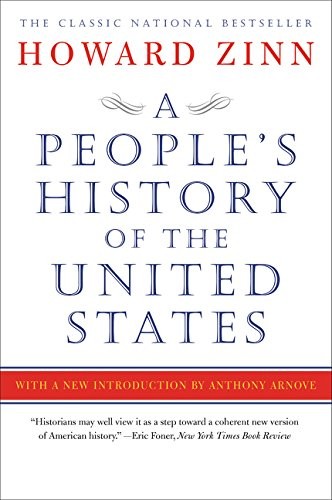
Two more operate at that same civilizational scale from different angles. 1491 rebuilds the pre-Columbian Americas as they actually were: populous, engineered, agriculturally sophisticated, not the empty wilderness the “discovery” narrative assumes. SPQR does the same work for ancient Rome, tracing a city-state’s thousand-year climb to empire and asking what actually held it together. A People’s History of the United States is the odd one structurally — not civilizational in scope but deliberately bottom-up, retelling American history from the people on the receiving end of it rather than the people making the decisions.

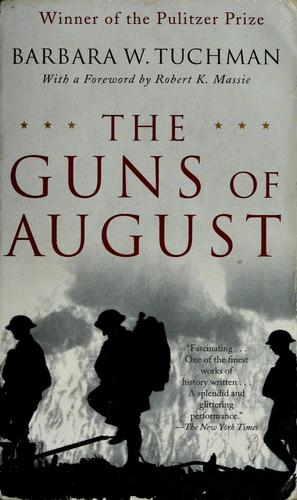
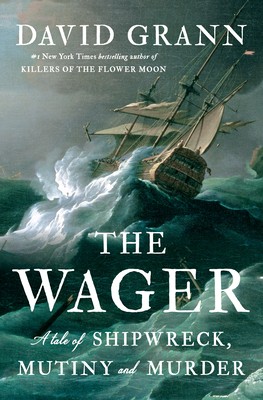
The last three narrow the lens to a single event, and they’re better entry points if “big picture” sounds like a textbook to you. The Guns of August covers the opening weeks of World War I with enough detail that you feel the war becoming inevitable in real time. The Wager and The Wide Wide Sea are both maritime disaster narratives — a shipwreck and mutiny, a doomed expedition — closer to adventure writing than history class.

One honest note: these seven span wildly different scales, and reading them back to back can feel like switching altitudes constantly. If you want a coherent single narrative, pick one tier and stay there.

Quick Comparison

#BookBest for
1Guns, Germs, and SteelJared Diamondyou want the classic, Pulitzer-winning answer to why some societies ended up with guns, steel, and immunity to smallpox while others didn't -- geography and environment, not race or cultureAmazon
21491Charles C. Mannyou were taught the pre-Columbian Americas as sparse wilderness dotted with small tribes, and want the archaeological evidence that the real picture was far larger, more urban, and more engineeredAmazon
3SPQRMary Beardyou want a rigorous, readable history of Rome from a working classicist who's more interested in ordinary Roman life and the gaps in the record than in another emperors-and-conquests highlight reelAmazon
4A People's History of the United StatesHoward Zinnyou want the counter-narrative to the textbook version of American history, told through workers, enslaved people, women, and war resisters instead of generals and presidentsAmazon
5The Guns of AugustBarbara Tuchmanyou want the classic account of how great powers can talk, plan, and alliance-build their way into a catastrophe nobody individually chose -- still assigned in military and diplomatic history courses over 60 years after publicationAmazon
6The WagerDavid Grannyou want true survival history with a genuine mystery at its center -- not just what happened, but whose account of it you should believeAmazon
7The Wide Wide SeaHampton Sidesyou want a narrative history of exploration that doesn't flinch from the imperial violence underneath the adventureAmazon

The Books

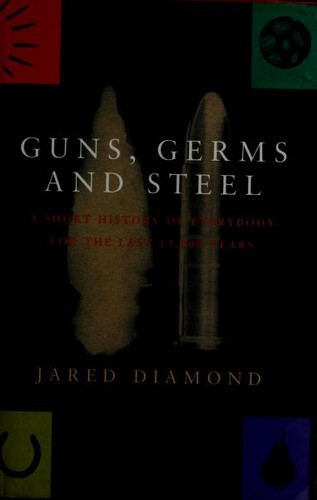
Guns, Germs, and Steel by Jared Diamond book cover

1. Guns, Germs, and Steel

Jared Diamond · 1997

Jared Diamond's answer to why Europeans conquered the Americas and not the other way around: not intelligence, not culture, but geography -- crops, livestock, and continents shaped like they are.

Diamond wrote this as a biologist and geographer, not a historian, and that outsider’s-eye framing is both the book’s strength (a genuinely novel angle) and the source of most of the specialist pushback (insufficient grounding in the historical particulars he’s explaining). Worth knowing which hat he’s wearing before you treat any single claim as final.

Read it if: you want the classic, Pulitzer-winning answer to why some societies ended up with guns, steel, and immunity to smallpox while others didn't -- geography and environment, not race or culture

Skip it if: you want a book anthropologists and historians broadly still endorse without pushback -- Diamond's environmental-determinism thesis has drawn serious, ongoing academic criticism for oversimplifying and downplaying human agency, similar to the pushback Sapiens gets on this site
Full verdict: Guns, Germs, and Steel →

1491 by Charles C. Mann book cover

2. 1491

Charles C. Mann · 2005

Before Columbus, the Americas weren't an untouched wilderness waiting to be found -- they were farmed, engineered, and in places more populous than Europe.

Mann is a science journalist, not an archaeologist, and the book is best read as a guided tour through specialists’ work rather than original research – which is exactly its strength for a general reader. It won a National Book Critics Circle Award finalist nod and has genuinely shifted how the pre-Columbian Americas get taught since 2005.

Read it if: you were taught the pre-Columbian Americas as sparse wilderness dotted with small tribes, and want the archaeological evidence that the real picture was far larger, more urban, and more engineered

Skip it if: you want a single tidy narrative -- Mann is synthesizing a lot of genuinely contested archaeology across wildly different regions and cultures, so the picture he builds is a survey of live debates, not a settled consensus

Full verdict: 1491 →

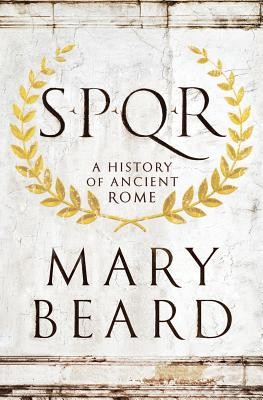
SPQR by Mary Beard book cover

3. SPQR

Mary Beard · 2015

Mary Beard spends less time on emperors and battles than on how an ordinary Roman actually ate, worked, and argued -- and how much of what we 'know' about Rome is later myth.

Beard won the Wolfson History Prize for SPQR, which tells you the academic historians rated the rigor as highly as general readers rated the readability – a combination that’s rarer than it should be in popular history. If you’ve read Sapiens or Guns, Germs, and Steel and want the same big-picture ambition applied with more source skepticism, this is the next stop.

Read it if: you want a rigorous, readable history of Rome from a working classicist who's more interested in ordinary Roman life and the gaps in the record than in another emperors-and-conquests highlight reel

Skip it if: you're looking for a sweeping narrative of Rome's rise and fall with cinematic battle scenes -- Beard is a skeptic by training and spends real time questioning sources instead of retelling legend as fact

Full verdict: SPQR →

A People's History of the United States by Howard Zinn book cover

4. A People's History of the United States

Howard Zinn · 1980

Howard Zinn rewrites 500 years of American history from the ground up -- told through the people who built, farmed, fought, and sometimes rioted their way through it, not the presidents who signed the paperwork.

Zinn wrote most of this from secondary sources, not new archival research – his contribution was framing and selection, not discovery. That’s worth knowing before you cite it as primary evidence in an argument; treat it as the sharpest available synthesis of the story usually left out, not as the last word on any of it.

Read it if: you want the counter-narrative to the textbook version of American history, told through workers, enslaved people, women, and war resisters instead of generals and presidents

Skip it if: you want a balanced, two-sided survey -- Zinn openly writes as an advocate for the marginalized, not a neutral referee, so read it as a deliberate corrective, not the whole story

Full verdict: A People's History of the United States →

The Guns of August by Barbara Tuchman book cover

5. The Guns of August

Barbara Tuchman · 1962

Barbara Tuchman's account of the diplomatic failures and first month of fighting that dragged Europe into World War I -- a war almost nobody wanted but nobody could stop once the mobilization plans started running.

The Kennedy connection isn’t folklore dressed up for the book jacket – it’s documented that he distributed copies to his cabinet during the missile crisis specifically to keep the room focused on how easily rigid plans and mutual distrust can escalate past the point anyone intended. That’s a rare thing for a 1962 history book: still functioning as an active policy reference decades later.

Read it if: you want the classic account of how great powers can talk, plan, and alliance-build their way into a catastrophe nobody individually chose -- still assigned in military and diplomatic history courses over 60 years after publication

Skip it if: you want a full history of WWI -- this covers only the diplomatic buildup and the first month of fighting (through the Battle of the Marne), not the war's later years, trench stalemate, or its resolution

Full verdict: The Guns of August →

The Wager by David Grann book cover

6. The Wager

David Grann · 2023

A British warship wrecks off Patagonia in 1741, and the survivors' competing accounts of what happened next become their own kind of mutiny.

Grann’s real subject isn’t the shipwreck – it’s what happens to truth once everyone who survived has a reason to lie about it. The court-martial doesn’t resolve the mystery so much as show you how institutions decide which lies are useful to believe.

It moves like a thriller for a book built almost entirely from 280-year-old court records and ship logs, which is the same trick that made Killers of the Flower Moon work. If you liked that one, this is an easy next pick.

Read it if: you want true survival history with a genuine mystery at its center -- not just what happened, but whose account of it you should believe

Skip it if: you want a tidy, single-narrator adventure story -- the whole point here is that no single account can be fully trusted

Full verdict: The Wager →

The Wide Wide Sea by Hampton Sides book cover

7. The Wide Wide Sea

Hampton Sides · 2024

Captain Cook's final voyage, told as the story of a legend who ran out of judgment right when he needed it most.

Sides’s real subject isn’t the Northwest Passage – it’s the gap between the disciplined, low-casualty Cook of the first two voyages and the impatient, erratic Cook who got himself killed on the third. That gap is more interesting than another straight “great explorer” narrative would have been.

It helps that Sides doesn’t let the reader off easy on the imperial violence underneath the adventure. This isn’t a book that asks you to root uncomplicatedly for Cook, and it’s better for it.

Read it if: you want a narrative history of exploration that doesn't flinch from the imperial violence underneath the adventure

Skip it if: you want a straightforward hero's-journey account of Cook -- Sides is deliberately complicating the myth, not polishing it

Full verdict: The Wide Wide Sea →

Frequently Asked Questions

What is the best world history book to start with?

Guns, Germs, and Steel. Jared Diamond asks the biggest possible question — why did some societies end up conquering others instead of the reverse — and answers it with geography and biology instead of the usual story about which peoples were smarter or braver. It reframes everything else on this list.

What's the difference between big-picture history books and the rest of this list?

Guns, Germs, and Steel, 1491, and SPQR operate at civilizational scale — centuries, continents, whole systems. The Guns of August, The Wager, and The Wide Wide Sea zoom into a single event: a war's opening weeks, a shipwreck, one expedition. Pick based on whether you want the forest or one specific tree.

Is A People's History of the United States biased?

Openly, and it says so. Howard Zinn wrote it as a deliberate corrective to textbooks that tell American history from the perspective of presidents and generals — he tells it from the perspective of the people those decisions were done to. Read it as one necessary lens, not the only one.

What's a good book for someone who only wants one narrow historical story, not a whole civilization?

The Wager or The Wide Wide Sea. Both are tightly focused narrative history — a shipwreck and mutiny, and a doomed naval expedition — closer to a thriller than a textbook. Start there if the big-picture books sound like homework.

Keep Reading