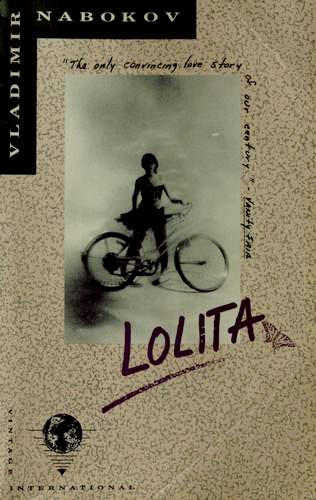
Lolita
by Vladimir Nabokov · 1955
A literature professor's beautiful, hypnotic prose narrates his own abuse of a 12-year-old girl -- and the whole point is that you're not supposed to trust a word of it.
Worth reading? Lolita stays in print because Nabokov pulled off something almost no one else has: prose so good it becomes a warning about trusting prose. It's not a comfortable classic, and it shouldn't be -- treat the beauty of the language as the trap it's designed to be, not an endorsement.
| Author | Vladimir Nabokov |
|---|---|
| Published | 1955 |
| Category | Fiction |
| Favorite quote | “Lolita, light of my life, fire of my loins. My sin, my soul.” |
The Verdict
What actually holds the book together is the distance Nabokov keeps forcing between Humbert’s version of events and the real facts leaking through the cracks – a hotel register, a school report, a look on Dolores’s face he can’t quite narrate away. That gap is the novel.
you want to see how an unreliable narrator's voice can be gorgeous and monstrous at the same time, and you're prepared to read it as an indictment of Humbert, not a romance
you want any ambiguity about the subject matter softened -- Nabokov doesn't soften it, and readers looking for comfort should skip this one entirely
Book Summary
Humbert Humbert narrates his own crimes in ornate, seductive prose specifically so the reader has to notice the gap between his beautiful language and his monstrous actions. Nabokov is testing whether style can seduce you into sympathy for someone you should be condemning -- and daring you to catch yourself if it works.
The novel is widely misread as a love story because Humbert is such a persuasive narrator; Nabokov built the trap on purpose. Dolores Haze's actual voice and suffering are almost entirely absent from the text, which is the book's real argument: Humbert has erased her personhood to make room for his obsession.
Nabokov's wordplay and structural games (fake academic forewords, literary allusions) are not just style flourishes -- they're part of showing how a sophisticated mind can rationalize anything, dressing abuse up as tragic passion.
Top 7 Lessons from Lolita
- An eloquent narrator is not a trustworthy one -- beautiful prose can be doing the work of self-justification.
- The absence of a victim's real voice in a story can be as telling as anything explicitly stated.
- Sophistication and intelligence provide no protection against, and can actively enable, moral self-deception.
- Reading sympathetically is not the same as reading uncritically -- the two can be pulled apart deliberately by an author.
- Nabokov structures the novel as a confession/legal defense, which frames every persuasive passage as an act of self-interest.
- Genuine literary beauty in the prose does not equal moral endorsement of the events described.
- The gap between what a narrator claims and what actually happened is where the reader is meant to do the real work.
Top 5 Quotes from Lolita
"Lolita, light of my life, fire of my loins. My sin, my soul."
Vladimir Nabokov, Lolita
"You can always count on a murderer for a fancy prose style."
Vladimir Nabokov, Lolita
"I have only words to play with."
Vladimir Nabokov, Lolita
"Ladies and gentlemen of the jury, exhibit number one is what the seraphs, the misinformed, simple, noble-winged seraphs, envied."
Vladimir Nabokov, Lolita
"It was love at first sight, at last sight, at ever and ever sight."
Vladimir Nabokov, Lolita
Frequently Asked Questions
Is Lolita worth reading?
Yes, as a masterclass in unreliable narration and prose style, but go in understanding it's a portrait of predation and self-justification, not a romance.
Is Lolita a love story?
No -- that's the most common misreading. Humbert's narration is designed to seduce the reader into sympathy Nabokov wants you to catch yourself falling for.
Why is Lolita's prose so admired despite the subject matter?
Nabokov deliberately gives his narrator dazzling language to demonstrate how eloquence can disguise moral horror -- the beauty is the point, not a contradiction of it.
Who should read Lolita?
Readers interested in unreliable narration and prose craft who are prepared to read critically against the narrator rather than with him.
Ready to read it?
Get Lolita on Amazon