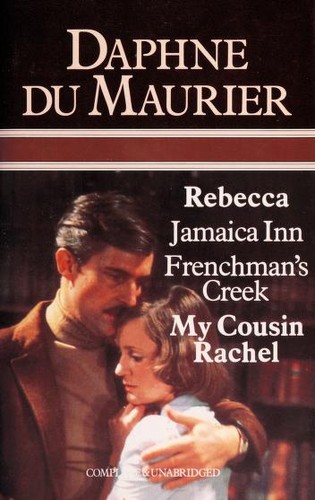
Rebecca
by Daphne du Maurier · 1938
A shy new bride moves into her husband's estate and finds she's living in the shadow of his dead first wife, whose presence still runs the house.
Worth reading? Rebecca is the book behind an entire genre of domestic gothic thrillers, and it still beats most of its imitators because du Maurier commits fully to the unnamed narrator's insecurity instead of rushing her toward confidence. Mrs. Danvers is one of the great villains in popular fiction without ever being physically threatening. If you liked Jane Eyre's Gothic mansion-with-a-secret structure, this is the 20th-century descendant, sharper and stranger by the end.
| Author | Daphne du Maurier |
|---|---|
| Published | 1938 |
| Publisher | Avon |
| Category | Fiction |
| Favorite quote | “Last night I dreamt I went to Manderley again.” |
The Verdict
Mrs. Danvers never lays a hand on anyone and still manages to be one of the most menacing characters in 20th-century fiction, purely through devotion turned obsessive. Du Maurier makes you wait for the real story about Rebecca, and when it arrives it’s genuinely a gut-punch that changes how you read everything before it.
you want the gothic romantic thriller that basically invented the 'new wife haunted by the old wife' genre, with one of fiction's great unreliable, ominous housekeepers
you want a straightforward romance -- this is a slow-building psychological thriller, and the narrator's own passivity can be frustrating for a while before it pays off
Book Summary
The narrator is never named, which isn't a stylistic quirk -- it's the whole point. She's defined entirely by comparison to Rebecca, the dead first wife whose taste, beauty, and confidence still shape every room at Manderley, and the novel is about a woman trying to become a self under the weight of someone else's legend.
Mrs. Danvers keeps Rebecca's memory alive as an act of devotion that curdles into psychological warfare against the new wife. The novel argues that grief unprocessed doesn't fade, it calcifies into control over the living.
The twist about Rebecca's actual character and death recontextualizes everything the narrator (and the reader) believed about the "perfect" first wife, turning a ghost story about inadequacy into a much darker story about complicity and moral compromise.
Top 7 Lessons from Rebecca
- Living in comparison to an idealized predecessor erodes identity faster than any direct conflict could.
- Mrs. Danvers weaponizes memory and nostalgia as tools of psychological control.
- Manderley itself functions as a character -- the house's routines and decor are Rebecca's ongoing presence in the marriage.
- The narrator's growth comes only when she learns the truth about Rebecca and stops idealizing her.
- Appearances (Rebecca's charm, the perfect marriage) mask a much darker private reality throughout the novel.
- Maxim de Winter's silence and evasiveness are as damaging to the marriage as anything Mrs. Danvers does.
- The novel subverts the fairy-tale romance setup (poor companion marries a rich widower) by making the happy ending morally compromised.
Top 4 Quotes from Rebecca
"Last night I dreamt I went to Manderley again."
Daphne du Maurier, Rebecca
"I am not brave, I never had the courage of the lion, the wolf, the bear that make an appearance in the crest."
Daphne du Maurier, Rebecca
"We can never go back again, that much is certain."
Daphne du Maurier, Rebecca
"Happiness is not a possession to be prized, it is a quality of thought, a state of mind."
Daphne du Maurier, Rebecca
Frequently Asked Questions
Is Rebecca worth reading?
Yes -- it's the sharpest gothic domestic thriller of its era, with one of fiction's most memorable villains in Mrs. Danvers, and a twist that recontextualizes the whole story.
Why is the narrator of Rebecca never named?
Du Maurier keeps her unnamed to emphasize how thoroughly she's defined by comparison to Rebecca rather than by any identity of her own.
Is Rebecca a romance or a thriller?
Both, but it leans thriller -- the atmosphere is more suspenseful and unsettling than romantic, especially once Mrs. Danvers and the truth about Rebecca enter the picture.
Is Rebecca hard to read?
No, it's a smooth, propulsive read with a famous opening line, though the first act is deliberately slow to build the narrator's insecurity before the plot accelerates.
Ready to read it?
Get Rebecca on Amazon