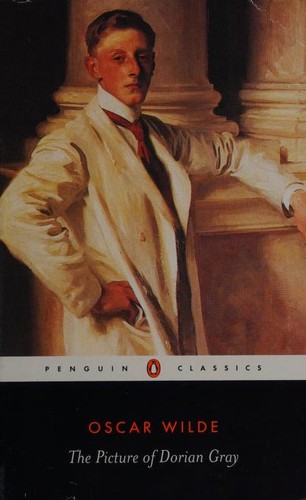
The Picture of Dorian Gray
by Oscar Wilde · 1890
A beautiful young man wishes his portrait would age instead of him, gets his wish, and spends the rest of the book finding out what a face with no consequences does to a soul.
Worth reading? Dorian Gray is Wilde's only novel and it's basically his plays' ideas about beauty, morality, and hypocrisy stretched into a Gothic horror premise. Lord Henry Wotton is the real engine of the book -- his epigrams are quotable in a way almost nothing else in Victorian fiction is. If you want the concept without the philosophy, you'll be impatient with the digressions; if you want Wilde's actual argument about art and morality, they're the point.
| Author | Oscar Wilde |
|---|---|
| Published | 1890 |
| Publisher | Penguin Classics |
| Category | Fiction |
| Favorite quote | “I can resist everything except temptation.” |
The Verdict
Lord Henry Wotton says almost nothing that isn’t quotable, and that’s both the book’s greatest asset and the reason Dorian’s actual moral collapse can feel secondary to the conversation happening around it. Wilde was a playwright first – this reads like his best dialogue wrapped around a horror premise.
you want a Gothic morality tale with the best epigrams in Victorian literature -- Wilde's wit is on every page, not just in the plot
you want fast-moving plot -- large stretches are essay-like digressions on aestheticism and hedonism delivered through Lord Henry's monologues
Book Summary
Dorian's portrait absorbs the visible cost of his choices, which means he never has to see, in his own face, what a life without consequence does to a person. Wilde is asking what happens to character when appearance stops keeping anyone honest.
Lord Henry Wotton's hedonistic philosophy (experience everything, feel no guilt, beauty is the only thing worth pursuing) corrupts Dorian not through action but through pure influence -- words alone reshape a life, which is Wilde dramatizing his own belief in the dangerous power of ideas.
The novel keeps circling the tension between aestheticism (art for art's sake, no moral duty) and the moral wreckage Dorian actually causes. Wilde never fully resolves which side wins, which is part of why the book still gets read as both an argument for and a warning against his own philosophy.
Top 7 Lessons from The Picture of Dorian Gray
- A life insulated from visible consequence doesn't become consequence-free -- it just hides the cost somewhere out of sight.
- Influence can corrupt as thoroughly as action -- Lord Henry never does anything to Dorian except talk.
- Chasing beauty and sensation as the only worthwhile pursuits leaves Dorian increasingly hollow, not fulfilled.
- Basil Hallward's love for Dorian as an ideal, rather than a person, sets the tragedy in motion as much as Dorian's own vanity does.
- Wilde uses the supernatural portrait as a literalized conscience -- what Dorian refuses to feel, the painting shows.
- Guilt doesn't disappear when you stop looking at it; Dorian's paranoia about the locked-away portrait only grows.
- The novel is skeptical of its own aestheticism -- pure hedonism, followed to its end, destroys the person pursuing it.
Top 6 Quotes from The Picture of Dorian Gray
"I can resist everything except temptation."
Oscar Wilde, The Picture of Dorian Gray
"There is only one thing in the world worse than being talked about, and that is not being talked about."
Oscar Wilde, The Picture of Dorian Gray
"To define is to limit."
Oscar Wilde, The Picture of Dorian Gray
"Youth! Youth! There is absolutely nothing in the world but youth!"
Oscar Wilde, The Picture of Dorian Gray
"Each of us has Heaven and Hell in him."
Oscar Wilde, The Picture of Dorian Gray
"The only way to get rid of a temptation is to yield to it."
Oscar Wilde, The Picture of Dorian Gray
Frequently Asked Questions
Is The Picture of Dorian Gray worth reading?
Yes -- it's a sharp, quotable Gothic morality tale, and Wilde's wit carries even the slower philosophical stretches.
Is The Picture of Dorian Gray hard to read?
No, it's shorter and more readable than most Victorian novels, though Lord Henry's long epigram-heavy monologues slow the plot in places.
What is the main theme of The Picture of Dorian Gray?
The cost of a life lived without visible consequence, and the corrupting power of influence and pure hedonism.
Who should read The Picture of Dorian Gray?
Readers who want Gothic horror with genuine wit and philosophical bite, not a straightforward horror plot.
Ready to read it?
Get The Picture of Dorian Gray on Amazon