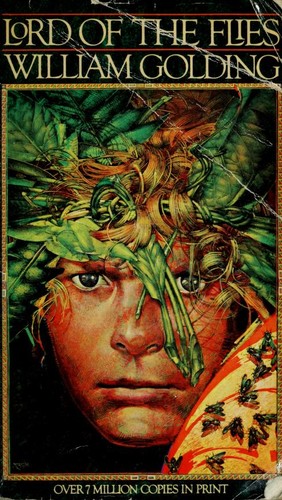
Lord of the Flies
by William Golding · 1954
A planeload of British schoolboys strands on a deserted island with no adults -- and within weeks, the veneer of civilization is gone and they're hunting each other.
Worth reading? Lord of the Flies still works as a fast, brutal counter-argument to every cozy desert-island story -- Golding gets from order to savagery in under 250 pages and never softens the landing. It beats most other 'society collapses' fiction on sheer economy: nothing here is padding.
| Author | William Golding |
|---|---|
| Published | 1954 |
| Publisher | Penguin |
| Category | Fiction |
| Favorite quote | “Maybe there is a beast... maybe it's only us.” |
The Verdict
What still lands is the ending’s tonal whiplash – the naval officer’s arrival, meant as rescue, instead exposes how small and childish the boys’ ‘war’ looks from outside, while quietly implying the adult world runs on the same impulses at a larger scale.
you want the sharpest, shortest argument that civilization is a thin, fragile agreement rather than something innate to human nature
you want a hopeful survival story -- this is closer to a warning, and it doesn't let the boys, or by extension the reader, off easy
Book Summary
Golding wrote this as a direct rebuttal to the optimistic castaway-adventure genre (like The Coral Island) -- his argument is that without adult authority and social structure, children (standing in for humanity generally) revert to tribalism and violence far faster than comforting fiction suggests.
The conch shell represents democratic order and the right to speak; its destruction late in the novel is the precise moment the boys' society fully collapses into raw power and fear-based rule.
Simon's death is the novel's darkest argument: the one character who understands the real 'beast' is the boys' own capacity for savagery is killed by the very group he's trying to warn, in a frenzy that mimics ritual sacrifice.
Top 7 Lessons from Lord of the Flies
- Social order is a maintained agreement, not a default state -- remove the structure and the underlying impulses surface quickly.
- Fear of an external threat is often really fear of what's inside the group itself.
- Charismatic, fear-based leadership (Jack) can out-compete reasoned, democratic leadership (Ralph) when a group is scared enough.
- Symbols of order (the conch) only hold power as long as the group agrees to honor them.
- The person who understands an uncomfortable truth first is often the one a frightened group turns on.
- Ritual and groupthink can make ordinary individuals capable of violence they wouldn't commit alone.
- Children are not inherently innocent of the same power dynamics and cruelty adults are capable of -- they just lack the usual restraints.
Top 4 Quotes from Lord of the Flies
"Maybe there is a beast... maybe it's only us."
William Golding, Lord of the Flies
"Fancy thinking the Beast was something you could hunt and kill!"
William Golding, Lord of the Flies
"The rules! You're breaking the rules!"
William Golding, Lord of the Flies
"We did everything adults would do. What went wrong?"
William Golding, Lord of the Flies
Frequently Asked Questions
Is Lord of the Flies worth reading?
Yes -- it's a short, sharp argument about how thin the line between civilization and savagery really is, and it still unsettles.
Is Lord of the Flies hard to read?
No, it's short and the prose is direct, though the escalating violence is disturbing by design.
What is the main theme of Lord of the Flies?
That civilized order is a fragile, maintained agreement rather than a natural human state, and that fear can turn a group toward tribalism and violence fast.
Who should read Lord of the Flies?
Anyone who wants the classic, compact counter-argument to optimistic survival fiction, and a fast read with a lasting unease.
Ready to read it?
Get Lord of the Flies on Amazon