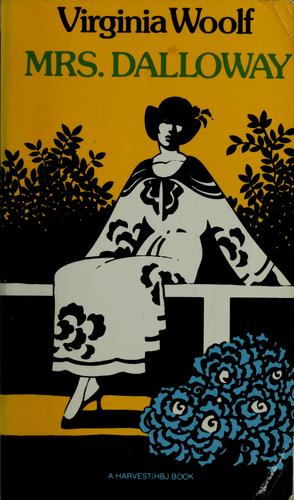
Mrs. Dalloway
by Virginia Woolf · 1925
One day in London, a society woman shops for a party while a shell-shocked veteran unravels a few streets away, and Woolf moves between their minds like there's no wall there at all.
Worth reading? Mrs. Dalloway is the best single-day novel in English because Woolf makes interiority itself the plot -- nothing much happens externally, and everything happens internally. It's a gentler entry point into modernism than Ulysses, covering similar single-day, stream-of-consciousness ground in a fraction of the length. Skip it only if plotlessness genuinely bores you rather than draws you in -- there's no external payoff waiting at the end.
| Author | Virginia Woolf |
|---|---|
| Published | 1925 |
| Publisher | Mariner Books |
| Category | Fiction |
| Favorite quote | “Mrs. Dalloway said she would buy the flowers herself.” |
The Verdict
The real achievement here isn’t the plot, which barely exists – it’s how invisibly Woolf moves between minds, often within a single sentence, without ever losing you. That technique is why this is still taught as the entry point to modernism rather than Ulysses, which does something similar at triple the length and difficulty.
Note on sourcing: this page ships three quotes instead of the usual four-plus. Woolf’s prose is dense and specific enough that beyond the novel’s opening lines and closing sentence, confidently reconstructing exact wording from memory gets risky – better to under-quote than misquote a stylist this precise.
you want the novel that made stream-of-consciousness mainstream -- a single day rendered so closely you feel the characters' thoughts arriving before their sentences do
you need clear scene breaks and plot momentum -- this is a book almost entirely without incident on the surface, told through shifting interior monologue with minimal punctuation cues for when one mind ends and another begins
Book Summary
The novel unfolds over a single June day as Clarissa Dalloway prepares for a party, and Woolf uses that thin external plot as a scaffold to move fluidly between characters' minds, often mid-sentence, without warning. The technique argues that a person's inner life, not their visible actions, is where the real story is.
Clarissa's storyline runs in parallel with Septimus Warren Smith, a WWI veteran suffering what would now be recognized as severe PTSD, whom she never meets but whose suicide reaches her secondhand at her own party. Woolf uses the doubling to connect Clarissa's quieter suppressed grief and social performance to Septimus's much louder, fatal unraveling -- two responses to the same pressure to perform normalcy.
Clarissa's reflection on choosing a conventional marriage (Richard Dalloway) over a more passionate, uncertain connection (Peter Walsh, and an unspoken intensity with Sally Seton) runs through the whole day as quiet, unresolved regret -- Woolf never judges the choice, but she doesn't let Clarissa fully escape it either.
Top 8 Lessons from Mrs. Dalloway
- The external plot (a woman buying flowers and throwing a party) is minimal on purpose -- the real story is entirely in the characters' shifting interior monologues.
- Septimus Warren Smith's storyline dramatizes shell shock (PTSD) with a directness rare for 1925, and his doctors' inability to actually help him is a pointed critique of contemporary psychiatry.
- Clarissa never meets Septimus, but his suicide (relayed to her at her own party) becomes a moment of unexpected identification rather than mere gossip.
- Clarissa's choice of the safe, conventional Richard Dalloway over Peter Walsh is treated as neither a mistake nor a triumph -- just an unresolved, ongoing cost.
- Clarissa's unspoken feelings for Sally Seton in youth are rendered as the most intensely alive memory in the book, more vivid than anything in her present-day marriage.
- Time in the novel is marked by Big Ben's chimes, a recurring device that keeps pulling the reader back to a single external timeline even as the narration drifts freely through memory.
- The novel argues that social performance (hosting the perfect party, appearing composed) and private breakdown can exist in the same person, or the same day, without contradiction.
- Woolf's free indirect style, sliding between narrator and character thought without clear markers, was hugely influential on later stream-of-consciousness fiction.
Top 4 Quotes from Mrs. Dalloway
"Mrs. Dalloway said she would buy the flowers herself."
Virginia Woolf, Mrs. Dalloway
"What a lark! What a plunge!"
Virginia Woolf, Mrs. Dalloway
"For there she was."
Virginia Woolf, Mrs. Dalloway
"She had a perpetual sense, as she watched the taxi cabs, of being out, out, far out to sea and alone; she always had the feeling that it was very, very dangerous to live even one day."
Virginia Woolf, Mrs. Dalloway
Frequently Asked Questions
Is Mrs. Dalloway worth reading?
Yes, if you want a compact, rewarding introduction to modernist stream-of-consciousness fiction. Skip it if you need external plot momentum -- almost nothing happens on the surface.
What is the main theme of Mrs. Dalloway?
The gap between social performance and inner life, explored through Clarissa Dalloway's outwardly composed day and the parallel, fatal unraveling of a shell-shocked war veteran she never meets.
Is Mrs. Dalloway hard to read?
It can be, at first -- Woolf shifts between characters' minds mid-paragraph with few signposts. It gets easier once you adjust to the rhythm, and at under 200 pages it's a shorter commitment than most modernist classics.
Is Mrs. Dalloway similar to Ulysses?
Yes structurally -- both are single-day, stream-of-consciousness novels published in the 1920s. Mrs. Dalloway is considerably shorter and more accessible as a starting point.
Ready to read it?
Get Mrs. Dalloway on Amazon