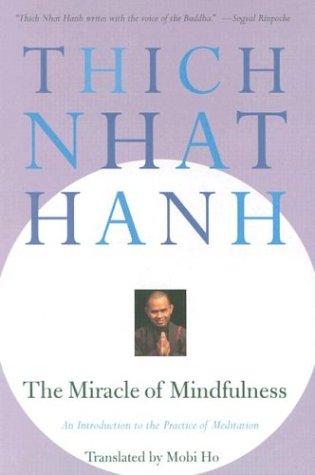
The Miracle of Mindfulness
by Thich Nhat Hanh · 1975
A Zen master's letter to a fellow monk, written during wartime Vietnam, that became one of the most translated meditation books ever published.
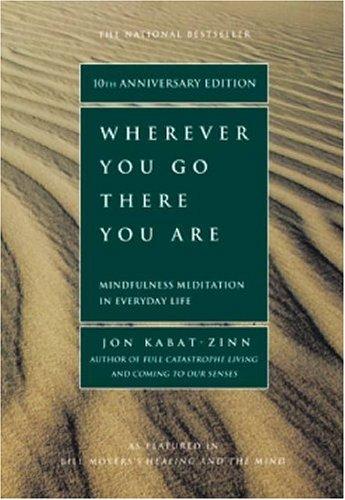
Worth reading? The Miracle of Mindfulness has a genuinely unusual origin: Thich Nhat Hanh wrote it as a long letter to a colleague running an orphan-relief organization during the Vietnam War, meant to help overworked staff stay grounded. That origin shows in the tone -- warm, direct, addressed to someone in real difficulty, not an abstract reader. It's shorter and more devotional than Wherever You Go, There You Are, and a better fit if you want mindfulness presented through Buddhist teaching rather than secularized clinical language.
| Full Title | The Miracle of Mindfulness: An Introduction to the Practice of Meditation |
|---|---|
| Author | Thich Nhat Hanh |
| Published | 1975 |
| Category | Self-Improvement & Psychology |
| Favorite quote | “Drink your tea slowly and reverently, as if it is the axis on which the world earth revolves.” |
The Verdict
The wartime origin gives this book a weight most mindfulness guides don’t carry – it wasn’t written as a lifestyle product, it was written to keep exhausted people functioning under real crisis. The “washing dishes to wash dishes” passage alone has been quoted in more mindfulness books than almost any other single line in the genre.
you want the shortest, warmest possible introduction to mindfulness, rooted in Buddhist teaching rather than clinical psychology
you want a secular, science-first framing, this leans into Buddhist philosophy and imagery directly, unlike Kabat-Zinn's clinically-adapted approach
Book Summary
Mindfulness, for Thich Nhat Hanh, is best cultivated through the most mundane possible tasks -- washing dishes to wash dishes, not to get to the dessert faster; drinking tea to actually taste the tea. The famous "washing the dishes to wash the dishes" passage argues that treating any task as an obstacle to get through as fast as possible, rather than the actual substance of your life happening right now, is how most people sleepwalk through their days.
He also introduces conscious breathing as the simplest, most portable anchor for attention -- available anywhere, requiring no special posture or setting, and capable of interrupting a spiraling or scattered mind in seconds. The book treats mindfulness less as a discipline to master and more as a way of being present that anyone can access immediately, in the middle of an ordinary day.
Top 7 Lessons from The Miracle of Mindfulness
- Do one task at a time with full attention -- washing dishes to wash dishes, not to rush toward what's next.
- Use conscious breathing as a portable anchor for attention, available in any moment without special conditions.
- Treating routine tasks as obstacles to get through is a form of missing your actual life as it happens.
- A calm mind isn't a means to an end -- being present now is itself the practice, not preparation for later.
- Mindfulness can be practiced in ordinary work and relationships, not only in formal seated meditation.
- Interrupting a racing mind starts with returning attention to the breath, repeatedly, without frustration at needing to.
- Community and mutual support (Thich Nhat Hanh wrote this for overworked colleagues) sustain a mindfulness practice under real difficulty.
Top 4 Quotes from The Miracle of Mindfulness
"Drink your tea slowly and reverently, as if it is the axis on which the world earth revolves."
Thich Nhat Hanh, The Miracle of Mindfulness
"The most precious gift we can offer others is our presence."
Thich Nhat Hanh, The Miracle of Mindfulness
"Feelings, whether of compassion or irritation, should be welcomed, recognized, and treated on an absolutely equal basis."
Thich Nhat Hanh, The Miracle of Mindfulness
"Smile, breathe, and go slowly."
Thich Nhat Hanh, The Miracle of Mindfulness
Frequently Asked Questions
Is The Miracle of Mindfulness worth reading?
Yes, especially as a short, warm introduction to mindfulness grounded in Buddhist teaching. It's shorter and more devotional in tone than clinically-oriented mindfulness books.
What is the main idea of The Miracle of Mindfulness?
Mindfulness is cultivated through full attention to ordinary tasks (washing dishes, drinking tea) and conscious breathing, treating presence itself as the goal rather than a means to some later outcome.
Why was The Miracle of Mindfulness written?
Thich Nhat Hanh originally wrote it as a letter to a colleague leading relief work during the Vietnam War, intended to help overworked staff stay grounded under real hardship.
How is this different from Wherever You Go, There You Are?
Both cover similar ground, but this book presents mindfulness through explicit Buddhist teaching and is noticeably shorter and more devotional. Kabat-Zinn's book uses secularized, clinically-adapted language.
Ready to read it?
Get The Miracle of Mindfulness on Amazon